 BAUDOG The dictionary of dog–human communication
Contents
- In short
- When you see it
- What it may mean
- Assessment: where is your dog now?
- Go to a vet now if…
- If you think she ate something poisonous
- Shaking or a seizure? How to tell
- Shaking or twitching in her sleep
- Shaking and panting
- Older dog with trembling back legs
- A single full-body shake is a different thing
- Common questions
- What you can do right now
- Skills to build
- Exercises
- When you see it: do / don’t
- When to see a professional
- Sources
In short
Dogs shake for everyday reasons — being cold, being scared, dreaming, or tired muscles in an older dog — and for medical ones, including pain, low blood sugar, poisoning and nervous system disease. What tells them apart is the situation and any other symptoms. If your dog is shaking somewhere cold or frightening, and it stops once she’s warmed up, comforted or away from the cause, and she’s otherwise her normal self, it’s often fine to keep an eye on her. If there’s no obvious reason, it won’t stop, she’s wobbly, weak or vomiting, or she might have eaten something she shouldn’t, call a vet now. A single full-body shake, like a wet dog, is a different behavior altogether.
When you see it
- During thunder or fireworks, your dog trembles and hides behind the sofa
- She shivers nonstop in the vet’s waiting room or in the car
- On a cold morning walk, she stops and shivers
- An older dog’s back legs tremble when she’s been standing for a while
- She suddenly starts shaking for no reason you can see, and it doesn’t stop
What it may mean
Shaking, or trembling, is muscles contracting over and over without the dog meaning them to. Vets start with the normal reasons: the dog is cold, frightened, or asleep and dreaming. Shaking for those reasons usually stops when you give her a blanket or sweater, comfort her, or wake her up. Some dogs also tremble when they’re excited, but the normal reasons vets list are those three — cold, fear and dreaming. If whole-body tremors keep coming back and get worse with excitement or exercise, it can be a condition called shaker syndrome (see the fifth question, “How old is she, and what breed?”, in “Assessment” below).
Shaking from fear or anxiety comes with other signs: ears flattened back, tail tucked, body low, panting, hiding, trying to get away. If you see these alongside the trembling on a fireworks night, fear is the likely reason.
Shaking can also be a sign of illness: pain, low blood sugar, low blood calcium, poisoning, brain and nerve disease, and “shaker syndrome,” which is most common in small dogs. The AKC also notes that a dog may shake when she feels nauseous. Older dogs who have lost muscle can tremble when they’ve been standing for a long time, because the muscles tire. If it stops when she rests, that’s often the reason.
Assessment: where is your dog now?
When you notice the shaking, check these in order. This is one way BAUDOG suggests reading it. If any answer points to “see a vet now,” don’t wait and watch — go.
Is she somewhere cold or frightening?
→If she’s cold, warm her up. If she’s scared, move her away from the cause and reassure her. If that stops it, it’s often a normal kind of shaking.
Any other symptoms? (energy, appetite, walking, vomiting, diarrhea, drooling, pain)
→If she’s listless, wobbly, vomiting, not eating, sore when touched or standing hunched, think of illness and go to a vet now.
Could she have eaten or licked something?
→Chocolate, sugar-free products containing xylitol, slug and snail bait, insecticides and human medicines can cause shaking or seizures. Go to a vet now, and tell them what she ate and how much.
Does she respond when you call her? Is she fully aware?
→If she doesn’t respond, falls over paddling her legs, drools or wets herself, it may be a seizure. Go to a vet now.
How old is she, and what breed?
→In an older dog whose legs tremble when standing and settle when she rests, it’s often tired muscles. In a young adult small dog (especially a white one, around 1 to 2 years old) with whole-body tremors, it can be shaker syndrome. Either way, have a vet check her once.
Go to a vet now if…
- She started shaking for no reason you can see, it won’t stop, or it’s getting stronger
- She’s wobbly, can’t walk straight, or collapses
- She doesn’t respond when you call her, seems dazed, or is paddling her legs (a seizure)
- A seizure lasts more than five minutes — that’s a life-threatening emergency, so set off for the clinic
- She may have eaten chocolate, anything sugar-free that contains xylitol (gum, sweets, some peanut butters and toothpastes), slug or snail bait, insecticide, or human medicine
- She’s listless, vomiting, has diarrhea or won’t eat
- A puppy, especially a small breed, is shaking and listless (this can be low blood sugar)
- An unvaccinated puppy or dog (or one whose vaccinations you don’t know) is twitching or shaking, especially with or after a fever, runny eyes or nose, or diarrhea — possible signs of distemper
- She’s shaking and panting hard on a hot day or after exercise, drooling, weak, or her gums look bright red or very pale (possible heatstroke: start cooling her right away, then call the vet)
- Strong shaking keeps going and her body feels hot
If you think she ate something poisonous
Call your vet or the nearest emergency vet straight away — don’t wait to see whether symptoms appear. After xylitol, for example, signs such as tremors, wobbliness and vomiting often start within 30 to 60 minutes. Take the packaging with you, and tell the vet what products you have at home (flea treatments, garden pesticides, medicines).
Poison helplines run by veterinary poison specialists are open 24 hours a day. In the US: ASPCA Animal Poison Control Center, (888) 426-4435 (a consultation fee may apply), or Pet Poison Helpline, (855) 764-7661 ($99 per incident). In the UK: Animal PoisonLine, 01202 509 000 (£35–£45 per call). They are an addition to your vet, not a replacement.
Shaking or a seizure? How to tell
Tremors and seizures are both muscle movements a dog can’t control, so they can be hard to tell apart. A veterinary neurology practice explains that during tremors a dog is generally fully conscious, alert and responsive, aware of her surroundings, and doesn’t drool, wet herself or vomit. A seizure can take away consciousness.
If you’re not sure which it is, film it if you can do so safely, and show the video to your vet. Time it, too: a seizure that goes on for more than five minutes needs emergency treatment. After a first seizure, once she has recovered, book a vet exam as soon as possible. During a seizure a dog isn’t aware of her surroundings and isn’t in control of her body, so keep your hands away from her mouth — she could bite without meaning to.
Shaking or twitching in her sleep
Twitching paws, little yips and paddling legs while she sleeps are usually dreaming. Dream movements are typically brief and relaxed. Movements that are stiff or rigid, go on for a long time, or come with drooling, confusion or wetting herself could be a seizure — talk to your vet.
If you need to check, call her name or make a noise rather than touching her: a dreaming dog wakes up and responds, while a dog having a seizure can’t easily be woken. Touching a dreaming dog can startle her, and she may bite or scratch without meaning to.
Shaking and panting
Shaking plus panting has a few common explanations, and the setting usually tells you which. On a fireworks night, with hiding and pinned-back ears, it’s fear. On a hot day or after exercise, it can be heatstroke — panting, drooling, shaking, weakness and bright red or very pale gums are all listed signs. Heatstroke can be fatal: move her somewhere cool, start cooling her with water straight away, then get her to a vet.
Panting hard while resting, together with trembling, can also be a sign of pain. If none of these explanations fits, or it doesn’t settle, call your vet.
Older dog with trembling back legs
Senior dogs sometimes develop trembling in their legs, especially the back legs, as they lose muscle. It typically starts once she’s been standing longer than she’d like and settles when she lies down to rest. That pattern is often easy to recognize, but still mention it to your vet: pain can also cause trembling, and there is treatment and support for both. If it’s new, getting worse, or comes with stiffness, wobbliness or reluctance to get up, book a check soon.
A single full-body shake is a different thing
The head-to-tail shake a dog does when she’s wet — sometimes called a shake-off — isn’t the same as trembling. In a study that watched 96 dogs at a New York City dog run and a daycare (120 shakes in all), the dog was doing something different before and after the shake in 107 of the 120 cases, and shakes happened most often at the switch from one activity to another. (When a dog shook in the middle of play, though, she went back to playing more than half the time.) The shake is sometimes described as “shaking off stress,” but these results suggest that isn’t its only meaning.
Another study (64 pet dogs) set up separations from and reunions with the owner, and found dogs shook more often during a reunion with the owner. The researchers suggest the shake is more likely after a stressful moment has passed, especially near someone familiar.
Common questions
“Should I hold or comfort my dog when she’s shaking?” If she’s scared and comes to you, it’s fine to calmly hold or stroke her. The UK charities PDSA and Dogs Trust explain that you can’t make fear worse by comforting it. If she doesn’t want to be held, don’t force it — give her a place to hide instead.
“Is my dog shaking on purpose, for attention?” You’ll see the claim that dogs learn to shake because it gets them fussed over, but we couldn’t find any research that tested it. Check first for cold, fear or illness.
“Do small dogs shake more?” Toy-breed puppies find it hard to keep warm, and if they don’t eat enough they can easily develop low blood sugar. If a small puppy is shaking and listless, see a vet promptly. Adult small dogs often appreciate being kept warm on cold days, too.
“My dog keeps shaking her head — is that the same thing?” No. Frequent head-shaking and ear-scratching are common signs of an ear infection, especially with red ears, a bad smell or discharge. Ear infections are painful, so have your vet look.
What you can do right now
- If she seems cold: warm the room, wrap her in a blanket or put a sweater on her
- If she’s scared: move her away from the cause (the noise, person or place), close the curtains, and put on music or the TV to mask sounds. If she comes to you, stroke her calmly
- At times when she isn’t shaking, start getting her used to the sounds she fears, beginning very quietly (the practice below)
- If you’re worried she’s unwell: note when it started, which part of her body shakes and how much, film it, and take it to the vet
Skills to build

Exercises
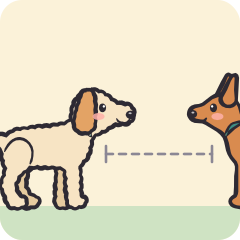
For a dog who shakes because a sound or place scares her, practice when she isn’t shaking, starting small and quiet. Shaking caused by illness needs treatment, not training.
When you see it: do / don’t
Do
- Look at the situation and her other symptoms together
- If she’s cold, warm her; if she’s scared, move her away from the cause
- If she comes to you scared, stroke her calmly to reassure her
- For shaking you can’t explain, film it and take her to the vet
Don’t
- Decide unexplained shaking is “just the cold” and keep waiting
- Scold a frightened, shaking dog, or force her closer to what scares her
- Put your hands near the mouth of a dog having a seizure (she could bite)
- Give her human medicines (painkillers included) on your own judgment
- Wait for symptoms to show up after she’s eaten something possibly poisonous
When to see a professional
- Shaking that started for no reason, won’t stop or is getting stronger
- Wobbliness, collapse, dazed behavior, or a seizure — straight away if a seizure lasts more than five minutes
- She may have eaten or licked something toxic (chocolate, xylitol, slug or snail bait, insecticide, human medicine)
- Shaking together with listlessness, vomiting, diarrhea, not eating, or pain when touched
- Shaking with heavy panting while resting, or with a hunched back (possible pain)
- Shaking and panting on a hot day or after exercise, with drooling, weakness or red or pale gums (possible heatstroke)
- A puppy who is shaking and listless
- An unvaccinated dog (or one whose vaccinations you don’t know) with twitching or shaking, especially with or after a fever, discharge from the eyes or nose, or diarrhea
- Whole-body tremors that started around 1 to 2 years old, or leg trembling in an older dog that’s becoming more frequent (often not life-threatening, but treatment and support exist)
- Frequent head-shaking with ear-scratching, red ears or a bad smell (possible ear infection)
- Panic at every thunderstorm or fireworks display (alongside training, medication can be an option)
Grow the skill underneath
Sources
- Veterinary Partner (VIN) — Tremoring or Shivering in Dogs (Wendy Brooks, DVM, DABVP)
- Southeast Veterinary Neurology — Tremors in Dogs: Causes and What They Mean
- VCA Animal Hospitals — Shaker Syndrome in Dogs
- MSD Veterinary Manual (owner version) — Nervous System Disorders and Effects of Injuries in Dogs
- Merck Veterinary Manual — Canine Distemper
- Cornell University College of Veterinary Medicine — Xylitol toxicities
- Cornell University College of Veterinary Medicine — Managing seizures
- Cornell University College of Veterinary Medicine — Recognizing pain in dogs
- AAHA — How to Tell if Your Dog is in Pain
- Veterinary Partner (VIN) — Hypoglycemia (Low Blood Sugar) in Toy Breed Dogs
- PDSA — Heatstroke in dogs
- RSPCA — Heatstroke in dogs
- VCA Animal Hospitals — True or False? Twitching in their sleep means your dog is dreaming
- American Kennel Club — Dreaming vs. Seizures in Dogs
- VCA Animal Hospitals — Ear Infections in Dogs
- Dogs Trust — Supporting your dog during fireworks
- PDSA — Dogs and phobias
- Cornell University College of Veterinary Medicine — Fearful dogs
- American Kennel Club — Why Is My Dog Shaking? Causes & Solutions
- Bryce, Nurkin & Horowitz (2024). Shake It Off: Investigating the Function of a Domestic Dog Behavior in Social Contexts. Animals 14(22):3248
- Riggio et al. (2026). Rethinking dog stress behaviours. Veterinary Quarterly
- ASPCA Animal Poison Control Center
- Pet Poison Helpline
- Animal PoisonLine (UK, run by the Veterinary Poisons Information Service)