 BAUDOG The dictionary of dog–human communication
Contents
- The finished behavior
- Assessment: where is your dog now?
- The cue
- How to signal
- Teaching steps
- When to reward
- If a trainer came to your home: the first session and the first homework
- Don’t force her into a down
- Practice down when she’s tired and settled
- “Down” or “Off”? Keep them separate
- Teaching small dogs — and dogs who find down awkward
- A good sign to move on
- If it isn’t working
- Prescription: a suggested order
- In the moment: do / don’t
- When to see a professional
- Sources
The finished behavior
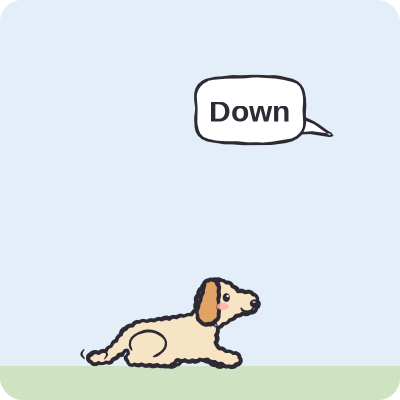
One “Down,” and her belly and both elbows go to the floor and stay there until the next cue or “Free.” Down is the position dogs are most often asked to hold for longer waits, and it’s the doorway to calm-down skills like settling on a mat or waiting at a café.
Assessment: where is your dog now?
A visiting trainer might check something like this at home before starting.
From a sit, if you move a treat slowly from her nose to the floor between her front paws, does her head follow? Do her elbows reach the floor?
→If only her head goes down, say “Yes” right there. Build it up bit by bit: head → elbows → belly (step 2).
Do her front legs go down while her bottom stays up?
→If your hand moves too fast or too high above the floor, she’ll stand up. Go slower, right along the floor, and try changing the direction you move your hand (see the troubleshooting below).
What’s the floor like?
→Plenty of dogs don’t want to lie down on cold, slippery or bumpy surfaces. Start on carpet or a mat.
Does she lie down and pop straight back up?
→Check whether the treat arrives only after she gets up. Deliver it on the floor while she’s still lying down.
Does lying down or getting up look sore or effortful?
→For senior dogs or dogs with sore joints, lying down can hurt. Don’t ask for lots of repetitions, and talk to your vet.
The cue
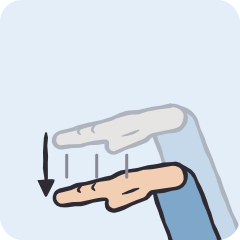
The hand signal is a smaller version of the lure — palm facing down, moving from above toward the floor. There’s no fixed form, so the family just needs to use the same movement.
How to signal
- Voice
Say “Down” once. Add the word only after she lies down reliably for the hand movement. Don’t also use “Down” to mean “get off the couch” or “stop jumping on me” — that’s “Off.”
- Hand
Keep the treat touching her nose and move it slowly, straight down to the floor between her front paws. Once that’s easy, make the same movement with an empty hand and pay from the other hand. It turns into the palm-down, top-to-bottom hand signal.
- Leash
No leash needed indoors. Outside, keep the leash in your hand, and check the leash rules where you live. Don’t stand on the leash to pull her head down.
- Body
At first, crouch or sit on the floor yourself — it makes getting your hand all the way down easier. Never hold her down. Once she has it, change your position: standing up, standing side-on.
Teaching steps
- 1
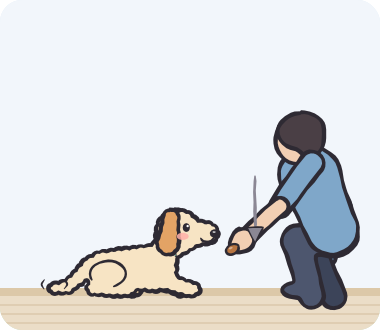
From her nose to the floor between her paws At home, quiet
Lure from a sit
Once your dog sits, move a treat slowly from her nose to the floor between her front paws. The instant her elbows and belly touch down, “Yes” → treat on the floor while she’s still lying down.
A good sign to move onShe lies down for the lure 8 out of 10 times (our rule of thumb)
- 2
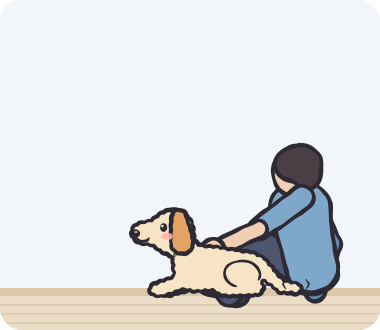
Crawling under a leg brings her down naturally At home, quiet
If it isn’t working, break it into smaller pieces
“Yes” when she looks at the floor, “Yes” when her head dips, “Yes” when her elbows bend — lower and lower each time. Small dogs often go down more easily when you lure them under your leg or under a chair.
A good sign to move onShe goes all the way down 8 out of 10 times
- 3
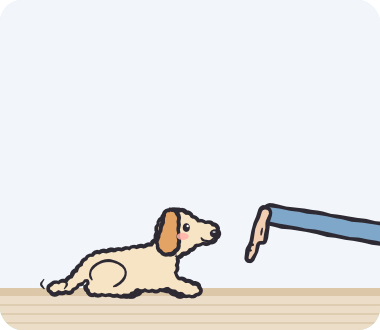
One hand guides, the other pays At home, quiet
Lose the treat from the luring hand
Make the same movement with an empty hand. When she lies down, “Yes” → treat on the floor from your other hand.
A good sign to move onShe lies down for the empty hand 8 out of 10 times
- 4
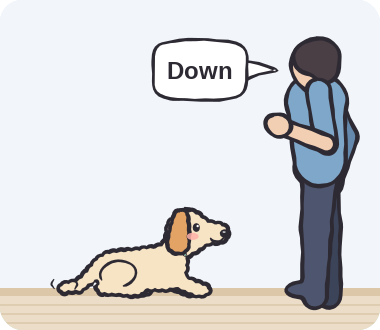
Word first, hand second At home, quiet
Add the word
Say “Down” once, then give the hand signal. Make the hand movement a little smaller each time.
A good sign to move onShe lies down to the word alone 8 out of 10 times
- 5
Even when you’re standing At home, small distractions
Standing up, or from the side
Ask while you stand upright, while you stand side-on, and from a step or two away. Will she lie down with a mat or a toy on the floor nearby?
A good sign to move onShe lies down 8 out of 10 times from any position
- 6
A portable mat makes down easier Quiet street
By a park bench, on a café patio
Bring her usual mat and ask for down on it. Start somewhere quiet, away from people and dogs.
A good sign to move onIn that place, she lies down to the word alone 8 out of 10 times
When to reward
Just right
“Yes” the instant her elbows and belly touch the floor. The treat goes down on the floor while she’s still lying down.
Too late
The treat arrives after she gets up — and “lie down, pop up” (a doggy push-up) is what gets paid.
If a trainer came to your home: the first session and the first homework
Here is one example of how a visit from an in-home dog trainer might go, put together by BAUDOG. Down takes some dogs longer to learn than sit. In the first session, following the hand down to the floor is plenty.
- Today: the trainer shows the hand movement (from her nose to the floor, slowly), then hands over to you for ten reps of step 1. Right there, they check you aren’t moving too fast and that the treat lands on the floor while she’s still down.
- Homework (for example): twice a day, about five minutes each, after a walk or play, when she’s a little tired and settled. Work through steps 1–3. Whenever she lies down on her own, mark it with “Yes,” too.
- What gets checked next visit: does she lie down for an empty hand — and for the word alone? Our rule of thumb is 8 out of 10, and the next step becomes the new homework.
Don’t force her into a down
Pushing on her back or shoulders, pulling her front legs forward, standing on the leash to bring her head down — drop all of them. Dogs Trust says not to push down on your dog’s back to make them lie down; show them what you want and reward them when they do it. The AKC explains that pushing tends to make a dog push back up, or become frightened and dislike lying down.
The American Veterinary Society of Animal Behavior (AVSAB) lists forcing a dog down (the so-called “dominance down”) among the methods to avoid, and cites a survey in which such techniques often provoked an aggressive response from dogs.
Practice down when she’s tired and settled
Asking a dog who’s bursting with energy to lie down is hard. The AKC suggests practicing after a walk or play. Marking the moments when she lies down on her own while relaxing at home is good practice, too (capturing: wait for her to lie down, then reward it).
“Down” or “Off”? Keep them separate
In English it’s easy to say “Down!” when a dog jumps up or climbs on the couch — but then the same word means two different things. Cornell University’s College of Veterinary Medicine advises using different words for different behaviors, because dogs don’t generalize as easily as we do. Use “Down” only for lying down, and teach a different word, such as “Off,” for getting four paws back on the floor.
Teaching small dogs — and dogs who find down awkward
Small dogs like Toy Poodles and Chihuahuas sometimes back away instead of lying down, even when your hand reaches the floor. Sit on the floor, raise one knee, and lure her under it with a treat — she can’t get through without going low, so lying down comes more easily. Battersea also suggests luring under a chair or your legs for dogs who struggle with big hand movements.
For dogs like Greyhounds who find sitting awkward, start from a stand. Battersea says many dogs will lie down if you bring the treat to the floor and then keep your hand still and wait. If your hand moves too fast, she’ll walk forward or back instead of lying down.
A good sign to move on
- Steps 1–4 (indoors, quiet): once she lies down to the word alone 8 out of 10 times, move on to changing your position (our rule of thumb)
- On a new floor or in a new place, it’s fine to go back to a bigger hand signal and rebuild
- Building how long she holds the down belongs to “Stay” — time, distance and distractions, one at a time
- If she struggles, go back one step (our rule of thumb: she misses twice in a row)
If it isn’t working
Her front end goes down but her bottom stays up
First, slow your hand down and keep it right along the floor. If her bottom still pops up, try a different direction. The American Kennel Club describes lowering the treat to the floor and then drawing it forward along the floor (an “L” shape); the RSPCA describes bringing the treat from her nose toward her chest first, then straight down. Which one works depends on the dog, so pick the one closer to how your dog moves when she lies down on her own. Say “Yes” the moment her bottom sinks even a little.
She lies down, then gets straight back up
Give the treat on the floor while she’s still down. Feeding a second and third treat in a row while she stays down naturally stretches out how long she lies there.
She won’t follow my hand down
Switch to a treat she likes more. If she still won’t follow, watch how she moves when she lies down on her own (filming it helps), and match your hand to that movement.
She won’t lie down when I’m standing up
At first she learned your crouching hand as the cue. Straighten up gradually — crouching, then half-bent, then standing — and shrink the hand signal a little each time.
She used to do it — now she won’t
It’s common for puppies and young dogs to go through a phase where they seem to have forgotten what they learned. Go back a few steps and rebuild. If she has suddenly started avoiding lying down, consider pain, too.
She won’t lie down outside
Plenty of dogs don’t want to lie down on cold, wet or bumpy ground. Use grass or a mat you bring along. Start in a quiet spot outdoors and go back one step.
Prescription: a suggested order
BAUDOG’s recommended order. Teach the down itself with the steps above; these two practices then grow it into a dog who can lie down and settle.
- ExerciseCharging Your Marker Word: How to Teach Your Dog That “Yes” Means a RewardDoable at home (Steps 1–4 at home)Lets you pinpoint the moment her elbows and belly touch down with “Yes.” Down is often built in small pieces, so a marker is especially useful.Read →
- ExerciseRelaxing on a Mat: How to Teach Your Dog to SettleDoable at home (Steps 1–4 at home)Lying down on a mat and relaxing onto one hip. It takes down from “a position on cue” to “a position she chooses to settle in.”Read →
In the moment: do / don’t
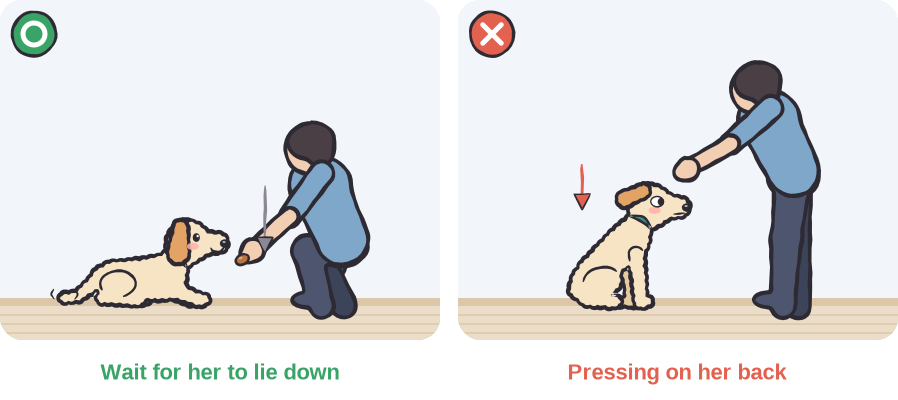
Do
- Move the treat slowly from her nose to the floor between her front paws
- Deliver the treat on the floor while she’s still lying down
- Start on carpet or a mat
- Practice after a walk or play, when she’s settled
Don’t
- Pushing her back or shoulders, or pulling her front legs
- Standing on the leash to bring her head down
- Giving the treat after she gets up
- Scolding her for not lying down
When to see a professional
- She avoids lying down, or seems sore or wobbly lying down or getting up. It can be hip or back pain
- She holds still with her front legs and head on the floor and her bottom high in the air (the “prayer position”). If she’s also vomiting or seems flat, it can be a sign of abdominal pain such as pancreatitis — see a vet right away
- A senior dog who has started taking longer to get up
The skills behind this command
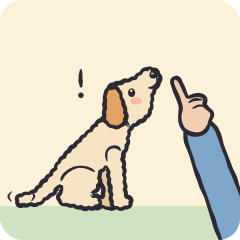 Core skill Understanding Cues Understanding that the word “Down” and its hand signal mean the same thing, whatever your posture and wherever you are.
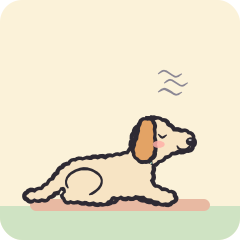 Core skill Settling Down Lying down and actually relaxing. Down is the doorway to the practices that build calm.
- ExerciseCharging Your Marker Word: How to Teach Your Dog That “Yes” Means a RewardDoable at home (Steps 1–4 at home)Read →
- ExerciseRelaxing on a Mat: How to Teach Your Dog to SettleDoable at home (Steps 1–4 at home)Read →
Sources
- Battersea Dogs & Cats Home — How to teach your dog to lie down
- Dogs Trust — How to train your dog to lie down
- RSPCA — How to train your dog to lie down
- American Kennel Club — How to Teach Your Dog to Lie Down
- American Kennel Club — The Three Ds of Dog Training: Duration, Distance, and Distraction
- Dogs Trust — Top ten dog training tips
- AVSAB — Position Statement on Humane Dog Training (2021)
- AVSAB — Position Statement on the Use of Dominance Theory in Behavior Modification of Animals
- Cornell University College of Veterinary Medicine (Riney Canine Health Center) — Training ‘stay’ vs. ‘wait’
- VCA Animal Hospitals — Hip Dysplasia in Dogs
- VCA Animal Hospitals — Pancreatitis in Dogs
- American College of Veterinary Surgeons — Intervertebral Disc Disease
- New York City Health Code Article 161, §161.05
- The Highway Code (UK) — Rules about animals, Rule 56