 BAUDOG The dictionary of dog–human communication
Contents
In short
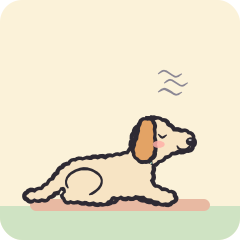
Dogs most often sigh in calm moments — after a game or a walk, or as they flop into bed — and VCA Animal Hospitals describes a sigh as often a sign of contentment. But almost no research has looked at what a dog’s sigh means, and we couldn’t find evidence for labels like “a frustrated sigh” or “a bored sigh.” Read it from her body and the moment: is she loosening up and closing her eyes, and what just happened? What matters more is spotting breathing that only looks like a sigh. Wheezing, groaning, labored breathing, or a swollen belly with retching that brings nothing up after a meal — call your vet now.
When you see it
- Back from her walk, your dog flops onto her bed and lets out a long “hmmph”
- She rests her chin on your lap, sighs, and closes her eyes
- When the game ends, she lies down, watches you and huffs out through her nose
- A pug or French bulldog snorts and snuffles a lot, especially when asleep
What it may mean
A dog’s sigh is a long breath out, often through the nose. Part of sighing is plain body maintenance: like all mammals, dogs sigh as a reflex several times an hour to keep their lungs working well, and you’ll rarely notice those (American Kennel Club). The big, audible sighs are the ones owners ask about. VCA Animal Hospitals describes them as often a sign of contentment and relaxation, most common in calm moments after play, meals or cuddles.
That description comes from observation, not research. In our search we didn’t find any behavioral study of what dogs feel when they sigh (there are experiments on the mechanics of breathing). Whether dogs sigh from “disappointment” or “frustration” the way people do is unknown. Many articles label sighs as boredom or frustration; BAUDOG doesn’t, because we couldn’t find evidence behind those labels. A board-certified veterinary behaviorist interviewed by the AKC also recommends reading a sigh from the situation and the dog’s whole body, and staying objective rather than assuming.
So don’t decide how she feels from the sigh alone — look at her body and the moment. Our rule of thumb: a sigh that’s part of settling down — body softening, lying down, eyes closing — can usually be read as relaxing. The behaviorist quoted by the AKC gives the same example: a dog who sighs as she curls up in her bed likely wants to rest.
Assessment: where is your dog now?
When you notice a sigh, check these in order. Here is one way to read it — BAUDOG’s suggested checklist.
Is she lying down with a loose body? Are her eyes closing?
→If it comes after play, a walk or a meal and she drifts off to sleep, it’s usually a sign she’s relaxing.
Are her eyes open and on you? What just happened?
→Right after a game or walk ends, or when a treat doesn’t come, a dog may lie down, watch you and breathe out. Nobody knows what she feels then, so check for other signs — stiffness, whining, pacing. If sighs tend to get her petted, she may learn to sigh more.
Is the place hectic, and is she also yawning, licking her lips, tucking her tail or pinning her ears?
→A sigh together with other stress signals is likely a sign of stress. Take her somewhere calmer.
Is her breathing itself normal?
→Wheezing or whistling, groaning, open-mouthed labored breathing, or heavy breathing that doesn’t ease with rest can mean a breathing problem or pain. See your vet.
After eating, is her belly swollen? Is she trying to vomit but bringing nothing up? Is she restless?
→This could be bloat (GDV), which is life-threatening. Go to a vet immediately.
Attention, boredom, stress or pain?
Most articles list these four. Here is what can be said about each.
- Attention: dogs can learn to sigh for your attention. If a sigh gets her petted or played with, she may start offering it more often (AKC). BAUDOG’s suggestion: if you’d rather she didn’t, give your attention when she’s quiet and settled instead.
- Boredom: whether the sigh itself means boredom hasn’t been studied. The AKC does suggest that an active dog sighing on a rainy indoor day may need more to do — puzzle toys, brain games or a short indoor training session.
- Stress: a veterinary behaviorist quoted by the AKC says that in a chaotic setting, a sigh alongside other stress signals such as yawning or lip licking likely means the dog is stressed. Removing her from the situation makes sense.
- Pain: the same behaviorist says sighing isn’t a typical sign of pain, but it can happen — an older dog with arthritis may let out a sigh of relief once she finally finds a comfortable position. Pain usually shows in other ways: limping, lethargy, restlessness, excessive panting, withdrawal or snapping, whining. Groaning is on the American Animal Hospital Association’s list of pain signs. If you see these, talk to your vet.
Pugs and French bulldogs: snorts and snuffles
Short-nosed (brachycephalic) breeds — pugs, French and English bulldogs, Boston terriers, shih tzus and others — are often born with narrow nostrils and airways, so they may snort, snore or breathe noisily all the time. Mildly affected dogs snort when excited and snore when relaxed or asleep; severely affected dogs tire easily and may even collapse after exercise.
Even if the sound looks like a sigh or a snore, have her checked by a vet if she seems to struggle more than usual or tires more easily. Extra weight makes breathing worse, so keeping her slim matters.
Short-nosed breeds can’t shed heat well and are prone to heatstroke. If she becomes listless or collapses on a hot day or after exercise, heatstroke is possible. Don’t wait: move her somewhere cool, wet her with water and get air moving over her to cool her down, and call your vet straight away.
Labored breathing after a meal: bloat (GDV)
In bloat (gastric dilatation-volvulus, GDV), the stomach fills with gas and can twist. It is life-threatening. It is most common in large, deep-chested dogs (Great Danes, Saint Bernards, German shepherds and similar), but any dog can get it.
Typical signs are retching or trying to vomit without bringing anything up (or only a little foam), restlessness and a swollen belly. As it progresses, breathing becomes difficult and the dog collapses. Don’t wait to see if it improves — call a vet immediately.
Common questions
“Is sighing a sign my dog is happy?” If she’s lying down with a loose body and drifting off to sleep, it’s usually a sign she’s relaxing. But that hasn’t been confirmed by research, so read it with her whole body and the situation.
“Why does my dog sigh when she lies down — at bedtime, or next to me in bed?” A sigh that’s part of winding down is nothing to worry about. It’s different if it comes with wheezing or groaning.
“Is sighing a sign she’s frustrated or sad?” Nobody knows whether a dog’s sigh carries frustration. You’ll often read that half-closed eyes mean pleasure and wide-open eyes mean disappointment; we couldn’t trace that rule to a study, so treat it as a guess. Rather than labeling a sigh at the end of a game as “frustration,” watch whether she seems to want more play (bringing a toy, staring at you) or her body loosens into a rest.
Skills to build
Exercises
If she can settle down by herself after excitement, it’s easier for her to relax at home and out and about. This is one example of what BAUDOG suggests.
When you see it: do / don’t
Do
- Look beyond the sigh: her body, her eyes and what just happened
- If it’s a settling-down sigh, leave her in peace
- With short-nosed breeds, keep an eye on breathing in the heat and after exercise
Don’t
- Decide a sigh means “frustrated” or “bored” and fuss over her or scold her
- Call wheezing, groaning or labored breathing “just a sigh” and keep waiting
- Wait until morning when she’s retching with a swollen belly after a meal
- Leave a short-nosed dog who is listless after heat or exercise to “rest it off” at home
When to see a professional
- After eating (or at any time), her belly is swollen, she’s retching without bringing anything up (or only foam), or she’s restless → possible bloat (GDV). Go to a vet immediately
- Wheezing or whistling, groaning, open-mouthed labored breathing, gasping, or heavy breathing that doesn’t ease with rest. Don’t delay — wheezing can mean a blocked airway
- A short-nosed dog becomes listless or collapses after exercise or heat → possible heatstroke. Move her somewhere cool, wet her and get air moving over her to cool her, and call your vet straight away
- A short-nosed dog’s snoring or breathing noise has got worse, or she tires more easily
- Sighing or groaning together with limping, restlessness, panting at rest, withdrawal or whining — possible pain
- Her sighing has suddenly increased and she’s less lively or eating less
Grow the skill underneath
Sources
- VCA Animal Hospitals — Why Do Dogs Sigh?
- American Kennel Club — Why Do Dogs Sigh? (with Dr. Vanessa Spano, DACVB)
- VCA Animal Hospitals — Brachycephalic Airway Syndrome in Dogs
- VCA Animal Hospitals — Bloat: Gastric Dilatation and Volvulus in Dogs
- PDSA (UK) — GDV (gastric dilatation volvulus) in dogs
- PDSA (UK) — Heatstroke in dogs
- VCA Animal Hospitals — Heat Stroke in Dogs
- AAHA — How to Tell if Your Dog is in Pain
- Cornell University College of Veterinary Medicine — Recognizing pain in dogs
- Siniscalchi, d’Ingeo, Minunno & Quaranta (2018). Communication in Dogs. Animals 8(8):131