 BAUDOG The dictionary of dog–human communication
Contents
- In short
- When you see it
- What it may mean
- Assessment: where is your dog now?
- At a glance: relaxed, playful, worried, or “give me space”
- Ears, eyes, mouth, tail and posture: what each part can tell you (but never on its own)
- The warning ladder: discomfort grows from small signals to a bite
- What to do the moment you see “I’m not comfortable”
- Petting and hugs: stop for a moment and let her answer
- Common misreadings
- Pages on individual behaviors
- Skills to build
- Exercises
- When you see it: do / don’t
- When to see a professional
- Sources
In short
No single body part tells you how a dog feels. A wagging tail or a yawn can mean different things depending on what’s happening. A review of the research on dog communication and US board-certified veterinary behaviorists both say the same thing: read each signal together with everything else her body is doing at that moment, and with the situation. Look at three things first: is her body loose or stiff, is she making herself bigger or smaller, and what just happened? Dogs usually “whisper” that they’re uncomfortable before they “shout”, so if you notice the small signals early and give her space, things are far less likely to go as far as a growl or a bite.
When you see it
- Her tail was wagging, but when you reached out to pet her, she growled
- She rolled onto her back, so you rubbed her belly — and she went stiff and still
- You scolded her and she looked away with that “guilty” face
- You can’t tell whether her yawning and lip-licking mean she’s sleepy or nervous
What it may mean
Dogs tell us how they feel with their posture, their facial expressions and the position of their tail and ears. As an article by US board-certified veterinary behaviorists puts it, “People are listeners; dogs are watchers.” Dogs don’t have words, so they talk with their whole body.
But one signal doesn’t have one fixed meaning. A review of research on dog communication concludes that you can only read a dog’s emotional state correctly by looking at a single behavior together with all the other signals she’s showing at the time and her overall body language. Dogs Trust gives a simple example: a dog who drools and licks her lips while her dinner is being made is just expecting food, but the same signals when she’s lifted into the car may mean she’s worried about the trip. In one study at the University of Pisa in Italy, 64 pet dogs went through a 19-minute test in a room none of them had been in before: being separated from their owner, left with a stranger, left alone and reunited. Behaviors usually listed as “stress signals” — lip-licking, shaking off, lifting a paw and others — changed from one part of the test to the next, but they didn’t simply rise as the situation got more stressful, and didn’t always change the way you’d expect. Lip-licking, for example, was more common when the dog was reunited with her owner or the stranger than when she was left alone. The researchers call this a preliminary finding: what a behavior means seems to depend on the dog’s state and the situation.
The biggest clues are size and tension. When a dog feels confident, alert or wants another to back off, she stands tall, tightens her muscles and makes herself look bigger. When she wants to avoid trouble or feels nervous, she lowers her body and tail, pulls her ears back and makes herself smaller.
The other key point: discomfort usually starts small. Dogs Trust describes it as dogs “whispering” their concern first — licking their lips, tucking their tail, moving away — and “shouting” with a growl, a snap or a bite only if the whispers aren’t noticed. Looking away, turning the head, yawning, licking the lips; if nothing changes, she stiffens, then growls. Not every dog climbs the steps one by one, though. Some skip the small signals and go straight to stronger ones, especially if they’ve learned that the small signals don’t work.
Assessment: where is your dog now?
Instead of deciding from one signal, look in this order. This is BAUDOG’s suggested way of reading her — one example, not the only way.
First, the situation: what just happened, and who’s there?
→Right after a stranger walks up, someone picks her up, you scold her or you arrive at the vet, the same signal is more likely to mean she’s tense. Just after she wakes up, or in the middle of play, it often means something else. Postures change from moment to moment, so watch the flow, not a single frame.
Is her body loose or stiff?
→A loose, wiggly, easy way of moving means she’s calm or having fun. If her body goes stiff, she suddenly freezes or slows right down, stop and watch.
Is she making herself small and low, or big and leaning forward?
→Low and small (ears back, tail down, back rounded): scared, anxious, or wanting to avoid a conflict. Standing tall with her weight forward and a fixed stare: wanting something to stop, or on alert.
What is her face doing (eyes, ears, mouth)?
→Soft eyes and a slightly open, loose mouth mean she’s relaxed. The whites of her eyes showing, looking away and lip-licking together point toward tension.
How does it compare with your dog’s normal?
→Ear and tail shapes vary a lot between breeds. Look for a change from her usual position.
At a glance: relaxed, playful, worried, or “give me space”
UK charity Battersea sorts dog body language into two kinds of signal: “distance decreasing” signals that say it’s fine to come closer, and “distance increasing” signals that ask you to give her space or stop what you’re doing. These four snapshots, drawn from the ASPCA, Dogs Trust, the RSPCA and Battersea, are a quick starting point. The sections below go part by part.
- Relaxed: body and face loose, ears and tail in their natural position, eyes soft, mouth closed or open and loose (her tongue may hang out), weight spread over all four paws. A loose, wide wag or a circling “helicopter” wag goes with a relaxed, friendly dog.
- Playful: bouncy, exaggerated movements, a play bow (front end down, rear end up), short pauses in the game. Her face stays soft even though her muscles are working.
- Worried or uncomfortable: tension in the face and body, tail lowered or tucked, ears back, looking or turning away, lip-licking, yawning when she isn’t tired, whites of the eyes showing, a raised front paw, weight shifted back, crouching.
- “Give me space now”: a stiff body, a hard stare, lips pulled back to show the teeth, wrinkled nose, growling — or rolling tensely onto her side or back with her tail tucked and a back leg raised. Stop what you’re doing and calmly create distance.
Ears, eyes, mouth, tail and posture: what each part can tell you (but never on its own)
Each of these is a “usually points this way” guide, not a rule. When several signals point the same way, her feelings are much easier to read.
- Whole body: loose and easy versus stiff or suddenly still. Raised hackles (hair standing up along the back) mean she’s highly aroused — scared, surprised or excited can all do it. It doesn’t necessarily mean she’s about to attack.
- Eyes: soft eyes mean relaxed. Wide eyes showing the whites (“whale eye”) mean tension or fear. A hard, fixed stare between dogs is a signal to back off. Looking away is a way of avoiding a confrontation. Large, dilated pupils can mean fear or stress — or simply excitement in play, so check whether the rest of her is loose and bouncy.
- Ears: for many dogs, relaxed ears sit in their natural position, often slightly back or out to the sides. Ears pricked forward mean interest and attention. Ears drawn slightly back can mean “I don’t want trouble”; pinned flat against the head means fear or self-defense. Ears held out sideways can sometimes show uncertainty, which is why you check the rest of the body. In floppy-eared dogs, watch the base of the ear.
- Mouth: slightly open and loose means relaxed. Lip-licking and yawning often show up when a dog is tense, too (they also happen when she’s sleepy or after food, so read the situation). A tense mouth with the corners pulled back, or a panting dog who suddenly shuts her mouth, can mean rising stress. Lips pulled back to bare the teeth and a wrinkled nose are a strong “stop” signal. Some dogs show their front teeth in an “appeasement grin” (also called a submissive grin), with squinty eyes, a lowered head and a soft body; that’s not the same as a snarl.
- Tail: read height, wag and body tension together. A loose, wide wag is often friendly; a low, fast wag or a tucked tail can mean anxiety. A wagging tail does not always mean a happy dog (more on our tail page).
- Front paw: lifting one front paw can show uncertainty or worry. It also happens before play, so read the situation.
- Play bow: rear end up, front legs down. A study that watched pairs of dogs playing found play bows most often came after a brief pause, to get the game going again.
The warning ladder: discomfort grows from small signals to a bite
Cornell University’s Riney Canine Health Center, at a US vet school, puts the number of people bitten by dogs each year at about 4.5 million, with children the most commonly injured — and notes that dogs often show many warning signs first, even when a bite seems to come “out of nowhere.” Cornell uses a “ladder” to show how fear, anxiety or stress can climb toward a bite. Notice her on the bottom rungs and step back, and she doesn’t need to climb higher.
A growl is an important warning that comes after the smaller signals didn’t work. If you punish a dog for growling, she may skip the warning next time and go straight to biting. If she growls, don’t scold — give her space.
Stress also adds up. Dogs Trust calls it “trigger-stacking”: several stressful or worrying experiences build up, making a dog more likely to react to something she’d normally cope with. Our page on dog stress signals explains how to spot it.
- Early signs: yawning, blinking, licking her nose a lot / turning her head away, avoiding eye contact / turning her body away or walking away
- Escalating signs: creeping backward, ears pulled back / standing crouched with her tail tucked / lying down with a leg up
- Critical warning signs: a stiff body and a hard stare / growling / snapping (a snap at the air that doesn’t make contact) / biting
What to do the moment you see “I’m not comfortable”
The point of reading her body language is to change what you’re doing. When you see the signals, you back off first.
- If you’re petting or holding her, stop and let go. Stop leaning over her and turn your body sideways.
- Move her away from whatever is bothering her (a person, another dog, a noise). If she tries to walk away on her own, let her.
- If a child or a visitor is involved, an adult calmly steps in and ends the interaction.
- If she comes to you because she’s scared, it’s fine to comfort her calmly and pet her. You can’t reinforce a feeling by comforting it.
- Find her “critical distance”. Dogs Trust explains that a fearful dog copes better when the trigger is far away, and that the distance she needs grows as the trigger gets bigger or more intense — one quiet dog across the street may be fine where a barking group is not. Stay far enough back that she stays calm, and ask others not to approach her.
- Once you know the cause, work on it later from a distance, little by little (see the practice below).
Petting and hugs: stop for a moment and let her answer
Not every dog enjoys being touched everywhere. In a study of 47 pet dogs, signs of appeasement, redirected and displacement behavior were most obvious when people petted them around the head and near the paws. Battersea suggests stroking the shoulders, chest or under the chin, which most dogs enjoy, and never reaching over a dog’s head first, because she can’t see your hand and may feel intimidated. Battersea also points out that dogs don’t generally appreciate hugs: being held tight feels restrictive, as if she can’t get away.
A simple check works with any dog. Pet her for a few seconds, then take your hand away. If she leans in or nudges you for more, carry on for a while. If she moves off, shakes herself or looks away, that’s her answer. Dogs Trust suggests the same for belly rubs: a gentle three-second stroke and then stop, so she has the chance to move away if it isn’t what she wants.
Common misreadings
“She knows she did wrong — look at that guilty face.” In an experiment with 14 dogs, researchers compared the so-called guilty look with whether the dog had actually eaten a forbidden treat while the owner was out of the room. The look had nothing to do with whether she’d eaten it. It appeared more when the owner scolded her, and was even clearer in dogs who hadn’t eaten the treat but were scolded anyway. The researchers concluded the look is a response to the scolding person, not a sign that she understands she did something wrong.
“Belly up means rub my belly.” A dog may roll over because she wants a belly rub, in play, or because she’s scared. Dogs Trust calls the frightened version an “appeasement roll”: she lies tensely on her side or back, tail tucked, ears back, a back leg raised — a sign she needs space now, and one often mistaken for a request for a tummy rub. A stiff body, a tucked tail and looking away together mean fear (more on our page about why dogs show their belly).
“A wagging tail means a happy dog.” Dogs wag when they’re happy, but also when they’re tense or worried (more on our tail page).
“Showing teeth always means aggression.” A snarl comes with a stiff body, a hard stare and lips pulled back. An appeasement grin comes with a lowered head, a soft body and squinty eyes, and usually means she’s anxious or trying to avoid trouble, not threatening you. Look at the rest of her before you decide.
Pages on individual behaviors
If one behavior is puzzling you, each of these pages explains how to read it from the whole body and the situation.
- Body signals: why dogs shake, why dogs yawn, why dogs sigh, what a dog’s tail means
- With people: why dogs lick you, why dogs stare at you, why dogs show their belly
- With their own body or things around them: why dogs lick their paws, why dogs dig
- The bigger picture: dog stress signals, calming signals
- Dog feelingsWhy Is My Dog Shaking? Normal Reasons, Warning Signs and When to See a Vet→
- Dog feelingsWhy Does My Dog Yawn? Sleepy, Stressed, or Catching Your Yawn→
- Dog feelingsWhy Does My Dog Sigh? Content Sighs vs. Breathing That Needs a Vet→
- Dog feelingsDog Tail Meaning: A Wagging Tail Doesn’t Always Mean a Happy Dog→
- Dog feelingsWhy Does My Dog Lick Me? Face, Hands and Feet — and How to Stop It Kindly→
- Dog feelingsWhy Does My Dog Stare at Me? Soft Eyes vs. a Hard Stare, and What the Research Really Says→
- Dog feelingsWhy Does My Dog Show Her Belly? It’s Not Always “Submission” — How to Tell If She Wants a Rub→
- Dog feelingsWhy Does My Dog Lick His Paws? Itch, Injury or Boredom — and When to See a Vet→
- Dog feelingsWhy Does My Dog Dig? Read the Reason, Then Give Her a Place to Dig→
- Dog feelingsDog Stress Signals: Early Signs, Signs of Panic, and What to Do→
- Dog feelingsDog Calming Signals: The List, What They Mean, and What Research Actually Shows→
Skills to build
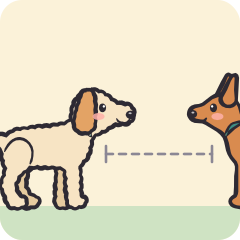 Core skill Confidence For dogs who shrink low and small around new people or things. This is the skill of turning scary things into “no big deal.”
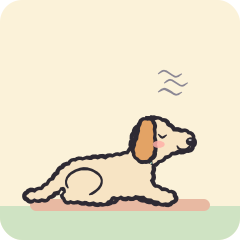 Core skill Settling Down Being able to come back to a loose, relaxed posture after getting worked up. Whether the stiffness melts away is the thing to watch.
Exercises
Once you can read her, the next step is practice that makes “I’m not comfortable” less frequent. This is BAUDOG’s suggested order — one example.
- ExerciseLook at That (LAT): The Game That Helps Reactive Dogs Stay Calm Around Dogs and PeopleStart at home, finish outside (Step 1 at home)Show her the thing she’s unsure of from a distance where she stays relaxed, and give a treat when she looks. You link it with something good before any fear signals appear.Read →
- ExerciseChin Rest Training: Teach Your Dog a “Start Button” for Grooming and Vet CareDoable at home (Steps 1–5 at home)For petting and grooming: carry on while she rests her chin, stop when she lifts it. It gives her a way to say “go ahead” or “wait.”Read →
When you see it: do / don’t
Do
- Look at her whole body and at what just happened, not one signal
- Learn your dog’s normal (ear and tail position, her relaxed face) — film her now and then so you can watch it back
- When you see the small signals, be the one who backs off first
- Stroke her chest, shoulders or under the chin, and pause every few seconds to see if she asks for more
Don’t
- Scold a dog for growling (she may stop warning and bite without one)
- Assume she’s fine because her tail is wagging
- Keep scolding because she “looks guilty”
- Push a frightened dog toward the thing she’s afraid of
When to see a professional
- She has suddenly started disliking being touched, or growling in situations where she never used to. Pain or illness may be behind it, so see your vet first
- Her usual posture or body language has changed — for example, she holds her tail low, or moves or sits differently. Pain can limit movement and change how a dog holds her body, and a sprained tail that can’t be raised can look just like a tucked, anxious one
- You notice changes in her eating, drinking, sleeping or toileting, or in how she interacts with you. Bring any videos or notes to the appointment
- She’s afraid of more and more things, or her fear is getting stronger. Talk to your vet early and ask for a referral to a behavior specialist (such as a veterinary behaviorist)
- She has growled, snapped or bitten. Don’t try to fix it alone; talk to your vet or a behavior professional. Video of what happened helps them understand
Grow the skill underneath
- Core skill Confidence
- Core skill Settling Down
- ExerciseLook at That (LAT): The Game That Helps Reactive Dogs Stay Calm Around Dogs and PeopleStart at home, finish outside (Step 1 at home)Read →
- ExerciseChin Rest Training: Teach Your Dog a “Start Button” for Grooming and Vet CareDoable at home (Steps 1–5 at home)Read →
Sources
- Siniscalchi, d’Ingeo, Minunno & Quaranta (2018). Communication in Dogs. Animals 8(8):131 (peer-reviewed review)
- VCA Animal Hospitals — Canine Communication: Interpreting Dog Language (Horwitz, DVM, DACVB; Landsberg, DVM, DACVB, et al.)
- Dogs Trust (UK) — How to understand your dog’s body language
- ASPCA Pro — Canine Body Language Tips
- RSPCA (UK) — Understanding your dog’s body language
- Battersea Dogs & Cats Home — Understanding your dog’s body language
- Battersea Dogs & Cats Home — How to approach a dog
- Cornell Richard P. Riney Canine Health Center — Dog Bite Prevention (April 2025)
- Cornell University College of Veterinary Medicine — Recognizing pain in dogs
- Cornell University College of Veterinary Medicine — Fearful dogs
- Riggio, Borrelli, Atilgan, Russo, Diverio & Mariti (2026). Rethinking dog stress behaviours: contextual and physiological insights from the attachment framework. Veterinary Quarterly
- Horowitz (2009). Disambiguating the “guilty look”: salient prompts to a familiar dog behaviour. Behavioural Processes 81:447–452
- Kuhne, Hößler & Struwe (2012). Affective behavioural responses by dogs to tactile human-dog interactions. Berl Munch Tierarztl Wochenschr 125:371–378
- Byosiere, Espinosa & Smuts (2016). Investigating the function of play bows in adult pet dogs. Behavioural Processes 125:106–113
- Leonetti, Cimarelli, Hersh & Ravignani (2024). Why do dogs wag their tails? Biology Letters 20:20230407
- PDSA (UK) — Dogs and phobias
- Dogs Trust (UK) — Supporting your dog during fireworks
- Dogs Trust (UK) — Signs your dog may be stressed
- VCA Animal Hospitals — Why do dogs yawn?