 BAUDOG The dictionary of dog–human communication
Contents
- In short
- When it happens
- How your dog feels
- Assessment: where is your dog now?
- What to do the moment she bites the leash
- If a trainer came to your home: the first session and the first homework
- Getting ahead of it
- Should you use a chain leash or a bitter spray?
- The missing core skill
- Exercises
- In the moment: do / don’t
- When to see a professional
- Sources
In short
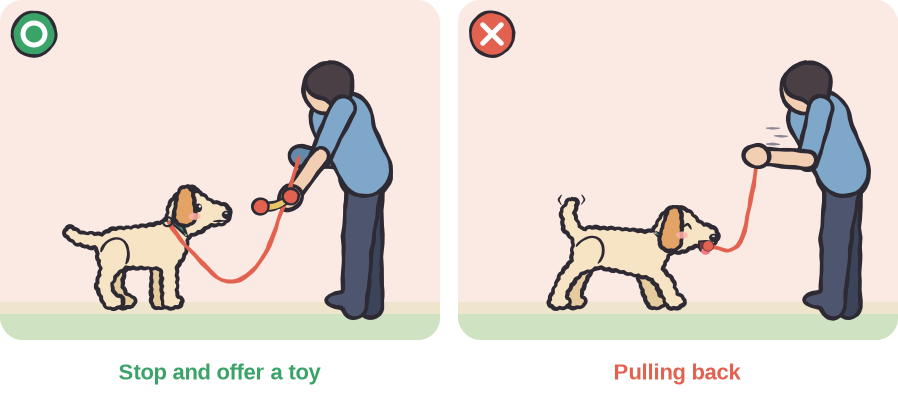
A dog who bites the leash isn’t being naughty or “testing you.” There are four common reasons: she’s so excited about the walk that the energy has to go somewhere; she’s frustrated that she can’t go where she wants; she’s playing with the swinging leash, or bored; or she’s worried about a dog or person coming closer and can’t get away. Dogs Trust, which calls biting, grabbing and shaking the lead “lead ragging,” says it is very common. The single most important thing in the moment: don’t tug back. To your dog, that starts a game of tug-of-war. Keep your hands still, stop walking, and offer her a toy she is allowed to grab instead. Then watch when it happens, and get in first next time.
When it happens
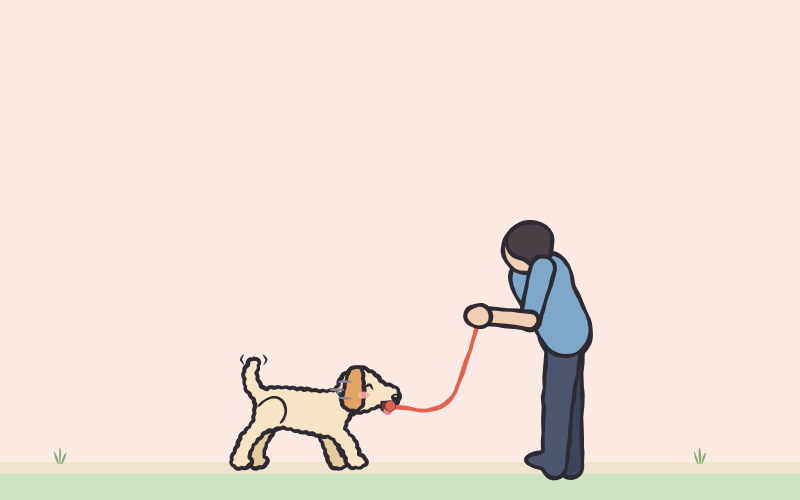
- The moment you step out of the door, your dog grabs the leash and shakes her head
- When you won’t let her go and greet another dog, she spins around and bites the leash
- She backs up with the leash in her mouth and starts a tug-of-war, growling playfully
- She has gone for the leash every time it’s clipped on, ever since she was a puppy
How your dog feels
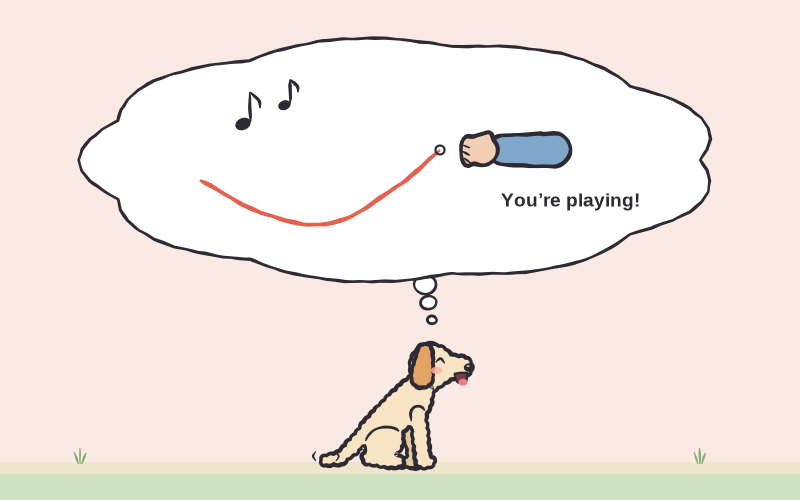
Just before and at the start of a walk, a dog is at her most excited. Dogs Trust explains, writing about mouthing, that an excited dog may struggle to channel that energy and may let it out through her mouth — this can happen when you’re getting ready for a walk too, and it usually isn’t aggression. A leash swinging right in front of her is the perfect target.
Frustration is another reason. She wants to greet a dog or meet a person, and the leash is what’s stopping her. Dogs Trust and the American Kennel Club (AKC) both note that some dogs bite the leash out of frustration at being held back. On the other hand, a dog who is anxious about a dog or person coming closer may also go for the leash — it’s the thing stopping her from getting away (Dogs Trust). A worried dog is better helped by turning away from what’s approaching; Dogs Trust suggests being ready to change direction if your dog grabs the lead when other dogs approach.
Sometimes it’s play. She bites, and you pull back, say something, or look at her — to a dog, that means someone is playing with her, or paying attention. The AKC says some dogs mouth the leash because they’re bored and want to get their owner to play, that it’s especially common in young, playful, excitable dogs, and that many puppies go through a leash-biting phase and grow out of it.
Assessment: where is your dog now?
What you do depends on why she bites. Look at these three things.
When does she bite? Getting ready and just out of the door / when she can’t reach a dog or person / when a dog or person comes toward her / on quiet stretches or the way home
→Just out of the door usually means excitement; can’t reach something, frustration; something approaching and her body goes stiff, worry; quiet stretches, play or boredom. Pick the matching idea from “Getting ahead of it” below.
When she bites, what does the family do? (tug back, say “No,” try to snatch the leash away)
→All of these can feel like play or attention to her. The first homework is for everyone to stop tugging back and stop talking to her when she bites.
Is it only the leash? Does she also grab your hands, clothes or other dogs?
→If it goes beyond the leash, don’t try to fix it alone — talk to your vet or a qualified behavior professional (see “When to call the vet” below).
What to do the moment she bites the leash
Not tugging back is where everything starts. Dogs Trust acknowledges that an owner’s instinct might be to tug back and snatch the lead away — but that can make the dog try even harder to grab it, especially if she’s trying to start a game.
- Don’t tug back, don’t try to snatch it, don’t scold. Keep your leash hand still, stop where you are, and stay calm (Dogs Trust: the calmer you are, the more likely your dog is to match that energy). If she’s biting because she’s scared, turn and move away first, before you stop (our suggestion).
- Waggle a toy she is allowed to grab close to the ground so she bites that instead. No toy? Scatter a handful of treats on the ground for her to sniff out (both are Dogs Trust’s suggestions).
- When she lets go of the leash, say “Yes” and “Let’s go,” and walk on. Drop treats now and then while she’s walking nicely too — if treats only appear when she bites, she can learn that biting earns treats (Dogs Trust).
- If she won’t let go, clip a spare leash to her harness (Dogs Trust). Then you can let go of the one she’s ragging and walk on with the other — no tug-of-war, and no risk of her running loose.
If a trainer came to your home: the first session and the first homework
Here’s how we’d expect a first in-home session to go — one example, not a fixed script. A trainer needs to see the biting happen to know why, so they might watch from the moment the leash comes out indoors to the first few minutes outside.
- Today: watch the leash going on indoors (does she start grabbing before it’s even clipped on?). Then practice step 1 of Trade (Drop It) together indoors, and choose one toy for walks — something she can carry, or a tug toy.
- Homework: Trade practice twice a day, 3–5 minutes each. Take that toy and treats on every walk. Just before the moments she usually bites (right out of the door, when another dog appears), hand her the toy or scatter a few treats to sniff. Everyone in the family: no tugging back when she bites. After each walk, note how many times she bit and when.
- Next visit: do your notes show fewer bites? When she bites and you stop, can she switch to the toy? There’s no set number. If she bites less than in the first week and switches to the toy when you stop, move on to Loose Leash Walking. If not, watch the biting moments together again and hand over the toy earlier.
Getting ahead of it
It’s easier to get in before she bites than to stop her once she has. The AKC agrees: instead of punishing leash tugging, it’s more effective to get ahead of it.
- Give her something to carry. A ball or another toy in her mouth means her mouth isn’t free for the leash. For dogs who love to tug, take a tug toy along (AKC, Dogs Trust, ASPCA).
- Make time for sniffing. The AKC notes that sniffing is rewarding and naturally calming for dogs. If she bites right after you leave the house, make the first few minutes a sniffing walk.
- Don’t dangle the leash in front of her like a toy. The AKC suggests keeping it loose and behind her. Many dogs get frustrated when the leash goes tight and turn around to bite it, so if she pulls, work on Loose Leash Walking at the same time.
- If she gets frustrated because she can’t greet other dogs, or worried when they come closer, turn away before they get close, or tell the other owner, “Sorry, we can’t say hello today” (Dogs Trust). Emergency U-Turn teaches the turn-away.
- If getting ready for the walk winds her up, break the link between the leash and leaving. PDSA suggests bringing the leash out often through the day — picking it up and putting it down, or clipping it on for a moment and taking it off — so it doesn’t always mean a walk. Once it’s on, wait for her to settle before you open the door.
- Overtired puppies mouth more (Dogs Trust). Check that walks aren’t too long and that she’s getting enough rest and sleep.
Should you use a chain leash or a bitter spray?
Organizations disagree on chain leashes. The ASPCA suggests one, saying most dogs won’t bite or tug on a chain leash. Dogs Trust, on the other hand, warns that restricting a dog so she can’t bite through the lead might actually make things much worse, because it doesn’t help her anxiety, frustration or boredom. Our view: deal with why she bites (excitement, frustration, play or worry) first. Equipment doesn’t take away the reason.
A chewed leash can snap mid-walk and let her run loose, so replace a damaged leash early (our suggestion).
The ASPCA also lists spraying a chew deterrent (a bitter-tasting spray) on a regular nylon leash. That doesn’t change why she wants to bite either, so if you use one, pair it with teaching her to switch to a toy (our suggestion).
The missing core skill
Exercises
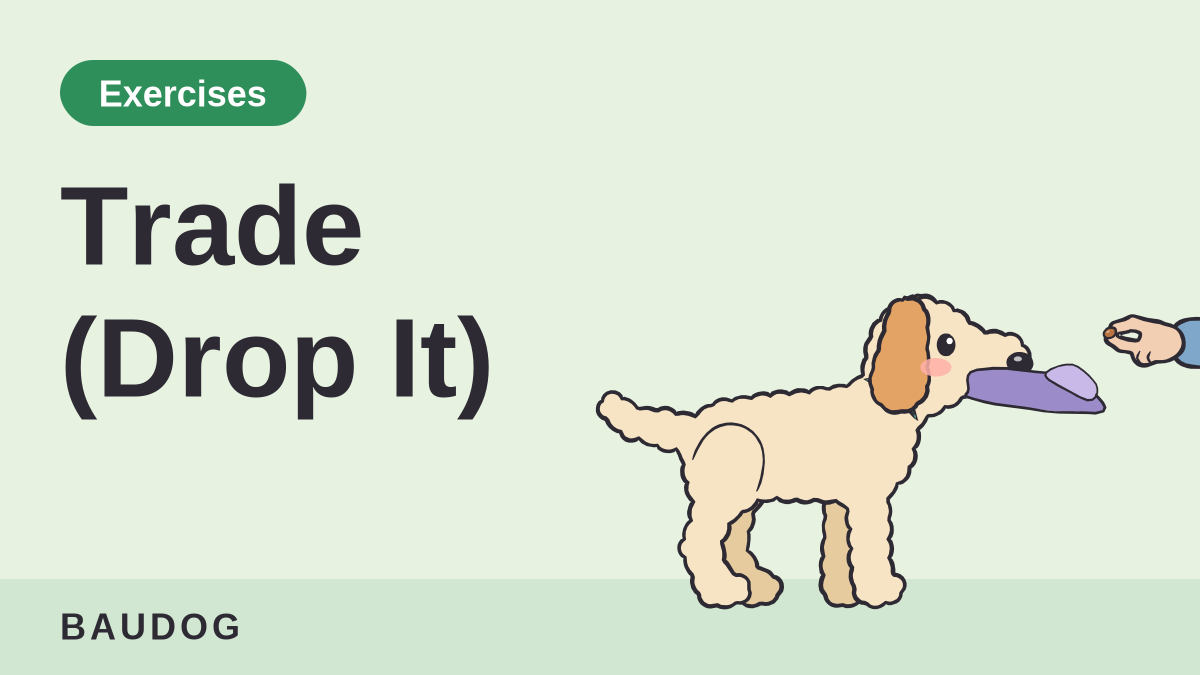
- ExerciseThe Trade Game: Teach Your Dog to Drop It by Swapping, Not GrabbingDoable at home (Steps 1–4 at home)On “Drop it,” she lets go of what’s in her mouth by herself — and she knows that letting go pays.Read →
- ExerciseLeave It Practice: From a Closed Fist to Food on the SidewalkDoable at home (Steps 1–3 at home)Your dog turns her face away from the treat (or the thing on the ground) on her own and looks at you.Read →
- ExerciseLoose Leash Walking: Stop When It’s Tight, Reward at Your Side (Starting Indoors)Start at home, finish outside (Steps 1–2 at home)Your dog walks somewhere near your side with the leash loose (hanging in a J). If it does go tight and you stop, she comes back on her own and lets it go slack.Read →
In the moment: do / don’t
Do
- When she bites, keep your hands still and stop
- Waggle a toy near the ground to swap the leash for it, or scatter treats to sniff out
- When she lets go, “Yes,” then “Let’s go”
- Hand her a toy before the moments she usually bites
Don’t
- Tug back or snatch the leash away (that starts a tug-of-war)
- Shout or pull away suddenly (it can worry or excite her and turn it into more of a game)
- Grab her muzzle or hit her
- Rely on a bitter spray or a chain leash alone
When to see a professional
- She grabs and bites not just the leash but your hands, clothes or other dogs. Dogs Trust says this is exactly when to get professional help — talk to a qualified behavior professional or your vet
- Her body goes stiff when she bites, or the growling and biting are faster and harder than play. The ASPCA notes that an aggressive dog’s body usually looks stiff and recommends seeing a professional if that sounds like your dog
- She has suddenly started biting, or is suddenly biting much more. Dogs Trust advises getting veterinary advice in that case — a health problem can be behind it
Go to the root
Don’t stop at the quick fix. Growing the skill underneath makes other problems lighter too.
 Core skill Impulse Control
- ExerciseThe Trade Game: Teach Your Dog to Drop It by Swapping, Not GrabbingDoable at home (Steps 1–4 at home)Read →
- ExerciseLeave It Practice: From a Closed Fist to Food on the SidewalkDoable at home (Steps 1–3 at home)Read →
- ExerciseLoose Leash Walking: Stop When It’s Tight, Reward at Your Side (Starting Indoors)Start at home, finish outside (Steps 1–2 at home)Read →
Sources
- Dogs Trust — Lead ragging
- Dogs Trust — Mouthing, nipping and puppy biting
- American Kennel Club — How to Stop Leash Tugging and Biting When Walking (Sassafras Patterdale, CPDT-KA)
- ASPCA — Leash Grabbing and Tugging
- ASPCA — Mouthing, Nipping and Play Biting in Adult Dogs
- PDSA — Training dogs not to pull
- AVSAB — Position Statement on Humane Dog Training (2021)