 BAUDOG The dictionary of dog–human communication
Contents
- In short
- When it happens
- How your dog feels
- Assessment: where is your dog now?
- What to do the moment she growls
- If a trainer came to your home: the first session and the first homework
- If she growls over food or toys
- If she growls when touched, picked up or groomed
- If she growls when resting on the couch or bed
- If she growls at strangers or other dogs
- Is it OK if she growls during play?
- Why “showing her who’s boss” and alpha rolls backfire
- Homes with children
- She’s growling “for no reason” — or only started as she got older
- If she has bitten, or growls at grooming or the vet: make the muzzle a treat dispenser
- If she bites someone
- The missing core skill
- Exercises
- In the moment: do / don’t
- When to see a professional
- Sources
In short
A growl is a warning: “I don’t like this — stop.” If you punish the growl, some dogs stop warning and go straight to a bite. When your dog growls, stop what you’re doing and calmly move away. Then work out what was happening — guarding food or a toy, being touched, being disturbed while resting, a stranger or another dog — and make that situation less worrying for her. It isn’t about teaching her who’s boss. And if the growling started suddenly, see your vet first: pain is often part of the picture.
When it happens
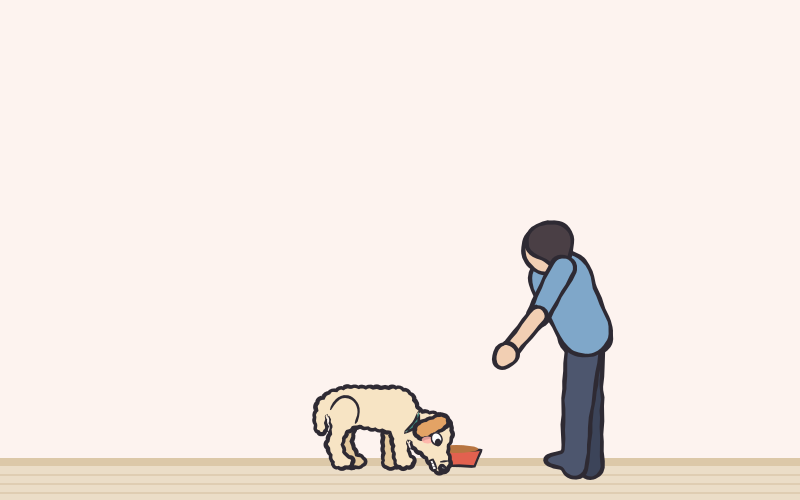
- She growls if you walk near her while she’s eating
- She growls when you try to take a toy, a chew, or something she picked up
- She growls when she’s picked up, when you touch her feet, or during brushing
- She growls when you try to move her off the couch or the bed
- She growls at strangers or other dogs on walks
- She growls while playing tug
How your dog feels
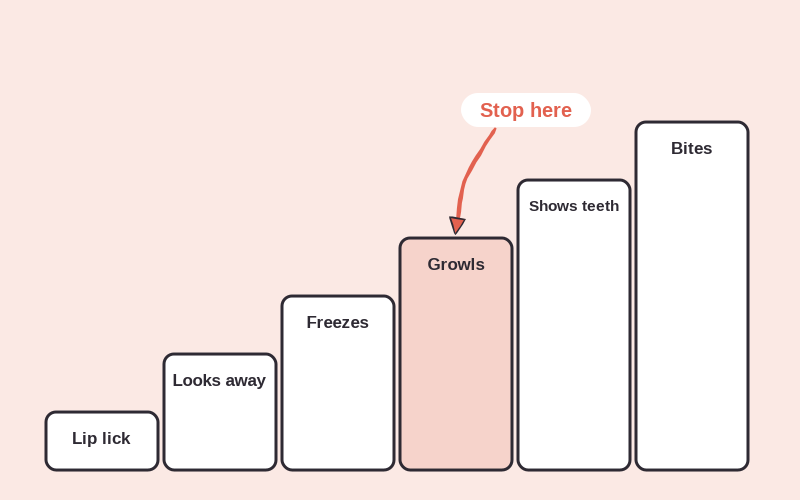
Growling is communication. RSPCA NSW, the Australian animal welfare charity, describes it as a warning signal that a dog feels scared, uncomfortable or threatened.
Before the growl, there are usually smaller signals: licking her lips, yawning, turning her head away, trying to walk off, going slightly stiff. The RSPCA in the UK notes that a slight stiffening of posture may be the first or only clue. If those quieter signals don’t work, dogs move up the ladder — growl, show teeth, bite. But dogs don’t always follow that order (ASPCA).
So what happens if you punish the growl? The RSPCA explains that punishing small signs like growling may stop them — but a dog with no way to show she feels threatened will hide it until she can’t any longer, and may then skip the warnings and bite. The growl is a warning worth keeping.
Some growls are play. A loose, wiggly body, an open mouth and a play bow with her rear in the air mean play. A stiff body, a hard stare and a tight mouth — or lips drawn back over her teeth — mean a warning (from the RSPCA’s body-language guide). Growls really do differ: a Hungarian research group found that dogs reacted differently to recordings of food-guarding growls and of growls at a threatening stranger, and in a study where 40 people listened to growls, they matched growls to the right situation — play, guarding food, being threatened — more often than chance.
Assessment: where is your dog now?
A visiting trainer would usually start by listening carefully and checking things like these. The answers decide where to begin.
What was happening when she growled? (Eating or holding something / being touched or picked up / resting / a stranger or another dog nearby / playing)
→The right response depends on the situation. Read the section below that matches.
Before the growl, did she lick her lips, turn her head away or go stiff?
→Make it a family rule: the moment you see one of those signals, stop and move away.
Did the growling start recently, or as she got older? Is there somewhere she doesn’t like being touched?
→If so, see your vet before any training. Pain may be behind it.
Has she ever bitten or tried to bite after growling? Has she growled at a child?
→If so, don’t work through this on your own: talk to your vet or a qualified behavior professional. Until then, the priority is managing things so the growl-worthy situations don’t happen.
What to do the moment she growls
RSPCA NSW advises stopping whatever you are doing and reviewing the situation — and, rather than telling your dog off for growling, reassuring her or removing her from the situation.
- Stop. Keep your voice quiet and your movements slow, and move away from her.
- Don’t scold, smack or stare her down. Don’t pin her.
- Don’t reach in to take the thing she’s guarding.
- If a child is nearby, move the child away from the dog.
- Once things are calm, write down what she was doing when she growled and what happened just before (our suggestion — it’s exactly what a trainer or vet will want to know).
If a trainer came to your home: the first session and the first homework
Here is one example of how a first in-home session might go — not a fixed script. With growling, the first visit is often less about exercises and more about agreeing how the household will avoid growl-worthy moments from today. If the growling started suddenly, a trainer will usually send you to the vet first.
- Today: talk through when she growls, look around the home, and agree on changes so those moments don’t happen (meals in a quiet separate spot, things she fights over put away). If she growls over things, the trainer demonstrates step 1 of Trade (swap something she doesn’t care much about for an even better treat), then you do 5 reps. If she growls about being touched, 10 reps of step 1 of Touch for a Treat (touch somewhere she’s comfortable for one second → treat).
- Homework: everyone in the household sticks to the changes. Note every growl or near-growl. Practice twice a day for 3–5 minutes. Don’t practice in the actual growl situations yet (her bowl at mealtime, the paw she hates having touched).
- Next visit: go over your notes together — are there fewer growls? Can she do step 1 with a relaxed body? If so, move to the next step. If growling is increasing, or she has tried to bite, the trainer will recommend a veterinary behaviorist.
If she growls over food or toys
Guarding things she values is natural dog behavior — but having them taken away again and again makes the guarding stronger. The ASPCA says forcibly taking things from a guarding dog is dangerous and unnecessary, and can sometimes make the guarding worse.
In a Canadian survey of about 2,200 owners and 3,589 dogs, dogs whose food bowl was taken away during meals were more likely to show more severe guarding, while dogs whose owners added tasty bits of food during meals were more likely to show milder guarding. (The survey was a snapshot, so it can’t show cause and effect.)
The “person who adds, not takes” exercise below is the ASPCA’s. The ASPCA sets three safety conditions for it. One: if you think your dog is likely to bite you, or she already has, don’t try to resolve it on your own — work with a qualified professional such as a veterinary behaviorist. Two: if you’re unsure how she’ll react, tether her to something sturdy so she can’t reach you if she lunges. Three: if she stands stiffly over the bowl, gulps her food faster, freezes, growls, stares, bares her teeth or snaps, stop at once, move away, and get professional help.
- Feed her somewhere quiet, away from foot traffic (a crate or pen is fine). The MSD Veterinary Manual also advises giving food, chews and toys that trigger guarding in an out-of-the-way spot.
- Don’t practice putting your hand in her bowl, petting her while she eats, or taking the bowl away.
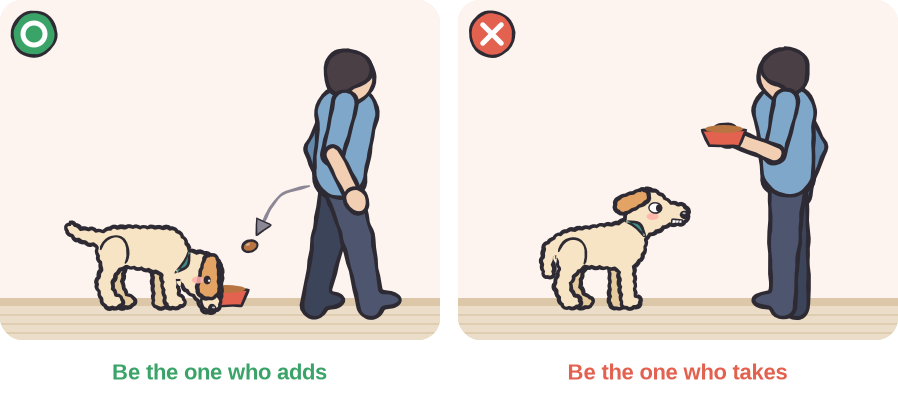
- When you approach, be the person who adds, not takes: take one step toward her, toss a special treat toward the bowl, and step straight back (the ASPCA’s method). Start from a distance where she doesn’t growl — and check the three safety conditions above first.
- To teach her to give things up, start by trading something she doesn’t care much about for an amazing treat (see Trade — the MSD manual also advises starting with low-value items).
- If she guards from children in the family, don’t let children do these exercises (the ASPCA says no one under 18).
If she growls when touched, picked up or groomed
Think about pain first. The MSD Veterinary Manual notes that a dog in pain may show defensive aggression when she is handled or expects to be. If the growling is new, or it’s always the same spot, see your vet first.
If she’s healthy, teach her that being touched means good things, starting from places she’s comfortable with and spreading out gradually (see Touch for a Treat). For grooming, a chin rest — you only work while she rests her chin on your hand, and stop when she lifts it — gives her a way to say “go ahead” or “wait” (see Chin Rest). MSD says handling for care is best addressed with cooperative care training, where the dog is rewarded for choosing to take part, and the American Veterinary Society of Animal Behavior (AVSAB) recommends using as little restraint as possible.
- Don’t go straight for the spot she dislikes. Work toward it one step at a time — shoulder → elbow → ankle → paw, for example.
- When you pet her, stroke briefly and stop. If she leans in for more, carry on; if she moves away, stop there. (MSD recommends this kind of “consent” petting for dogs who are sensitive to touch.)
- If she dislikes being picked up, say her name first as a warning, lift her briefly, then treat (our suggestion).
If she growls when resting on the couch or bed
Some dogs growl when they’re approached while resting or asleep. The MSD Veterinary Manual advises placing beds and crates where a dog can rest undisturbed. Pain plays a part here too: dogs in pain often become aggressive when approached while lying down. In one published case, a miniature Dachshund mix with suspected back or hip pain bared his teeth when his owner shifted position next to him on the bed or couch — without even touching him. Pain relief was started alongside management (another place to rest, and not disturbing him while resting), and two months later there had been only two incidents in 8–9 weeks. That is a single case.
- Don’t wake her by petting her, and don’t drag her off the furniture.
- If you need her to move, call her from a distance and treat her when she comes — or toss a treat on the floor so she hops down (our suggestion).
- Give her a quiet resting spot away from household traffic.
- Teach children not to approach a dog who is sleeping or eating (RSPCA).
If she growls at strangers or other dogs
Growling at strangers or other dogs on walks is usually fear. The approach is the same as for barking at people or other dogs: avoid meeting them up close, and at a distance where she doesn’t growl, teach her that seeing them means something good (see Look at That). Don’t let strangers touch her.
Is it OK if she growls during play?
Growling during tug is usually just play noise. If her body is loose and bouncy and she’s play-bowing, carry on. If she goes stiff, her expression changes, or her teeth start landing on your hand, drop the toy and take a break (our suggestion).
Why “showing her who’s boss” and alpha rolls backfire
Some articles blame growling on a dog thinking she outranks you. AVSAB says the most common cause of aggression in dogs is fear, and that pinning down a scared dog won’t address the cause of the fear. The MSD Veterinary Manual cites a study that found no evidence of a dominance hierarchy in dogs, and says that techniques like pinning, alpha rolls and shouting more often cause increased fear and anxiety — and so more aggression. The same goes for telling her off when she growls: you remove the warning, not the reason for it.
In a survey of 140 owners whose dogs had been brought to a US university veterinary behavior service, hitting or kicking led to an aggressive response in 43% of the dogs it had been tried on, forcibly taking something out of the dog’s mouth in 39%, and the “alpha roll” (pinning the dog on her back) in 31% (“aggressive” here combines growling or baring teeth, snapping or lunging, and biting). The survey relied on owners’ memories, so it can’t prove cause and effect. The researchers concluded that vets should warn owners about the risks of these methods.
Homes with children
The MSD Veterinary Manual notes that children are less likely to understand a dog’s signs of discomfort, so they’re more likely to provoke a growl or a bite. The RSPCA advises never leaving a child alone in the same room as a dog — even your own.
Teach children to leave dogs alone when they’re eating, sleeping or playing with a toy. If she has growled at a child, get professional help early.
She’s growling “for no reason” — or only started as she got older
If she suddenly growls at things she used to accept, suspect her body first. The MSD Veterinary Manual says health problems that cause pain or discomfort must be ruled out, because they lower a dog’s threshold for fear and aggression. Veterinary behaviorists at referral clinics in the UK, US and Spain reviewed 100 recent dog cases and reported that, by a conservative estimate, about a third involved some kind of pain (including suspected pain). Clinic by clinic, the share ranged from roughly 20% to 80% — and these are dogs referred for behavior problems, not dogs in general.
In older dogs, besides sore joints, cognitive decline can change how they respond to the world around them. Talk to your vet.
If she has bitten, or growls at grooming or the vet: make the muzzle a treat dispenser
For a dog who has bitten or tried to bite after growling, or who growls during grooming or vet visits, get her used to a muzzle as a safety measure alongside the training. Dogs Trust says a muzzle can be essential for dogs known to behave aggressively in certain situations — and a dog who is already comfortable in one can be treated quickly and safely by a vet in an emergency.
Choose a basket muzzle she can pant, drink and take treats through (Dogs Trust and Battersea in the UK; Best Friends Animal Society in the US). Panting is how dogs cool down. Fabric or mesh muzzles that hold the mouth closed don’t allow panting, drinking or treats, so they’re only for very short procedures, like an injection (Best Friends). It should fit without digging into her face or blocking her vision.
A muzzle isn’t a substitute for training. Dogs Trust notes that a muzzle won’t change how your dog feels about a situation, so even with it on, avoid situations that worry her. The Muzzle Up! Project, a US trainer-led muzzle awareness effort, says the same: a muzzle on its own won’t fix a dog’s reactivity. Changing how she feels is the job of the exercises above.
Dogs who growl over food or treats, or who dislike having their face or head touched, may not suit the usual treat-based muzzle training — Dogs Trust advises working on that with a professional first. Use a muzzle with guidance from a professional.
- Muzzle appears → treats. Muzzle goes away → treats stop. Repeat until she brightens up and comes over when she sees it (the Muzzle Up! Project’s plan).
- Hold the muzzle still at the height of her nose, with something lickable — squeezy cheese or paste — at the opening. Don’t move the muzzle toward her; she must always be free to pull her face out (Dogs Trust).
- Move the treat gradually deeper. Once she’s putting her nose in by herself, feed through the gaps, and build the time her nose stays in from 1–2 seconds upward (Muzzle Up! Project).
- For the strap: get her comfortable with the sound of the clip → the strap touching her neck → fastening it and undoing it straight away → gradually longer with it fastened (Dogs Trust, Battersea).
- With the muzzle on, do fun things — meals, play, practicing cues she knows. If it only goes on at scary moments, the muzzle itself can become a bad sign (Best Friends).
- If she paws or rubs at it, don’t take it off at that moment: distract her with a cue she knows or a treat, then remove it once she’s calm, and go back to the stage where she was relaxed (Dogs Trust, Best Friends). Taking it off as she paws teaches her that pawing works (Best Friends). If she backs away or stops taking treats, go back to an easier stage and slow down (Dogs Trust, Muzzle Up! Project). Spread training over short sessions across at least a few days (Battersea).
- If she needs to be muzzled for something urgent (a vet visit, say) while you’re still training, use a completely different style of muzzle, so you don’t undo her training with her own (Dogs Trust).
If she bites someone
Stay calm. Keep your voice and body calm — no scolding or hitting — and move her somewhere safe as quickly as you can. That is the first advice in a handout from the American College of Veterinary Behaviorists.
Make sure the person who was bitten washes the wound right away with soap and water and gets medical advice — the CDC advises urgent medical attention after a possible rabies exposure.
Rules after a bite depend on where you live, so find out what applies to you — for example, whether the bite has to be reported to animal control or the local health department. In the US, national public-health guidance is that a healthy dog who bites a person is confined and observed daily for 10 days; questions about a bite should go to your state or local public-health authority.
Then get help — the first time, not the third. The same ACVB handout advises seeking help the first time your dog bites, talking to your vet, and, while you wait, completely avoiding the situation where the bite happened.
The missing core skill
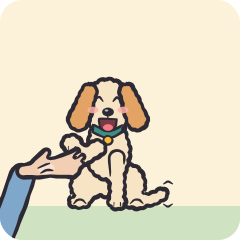 Core skill Comfort with Handling Being comfortable with being touched, held and groomed. It sits underneath growling about handling.
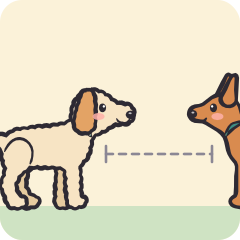 Core skill Confidence Taking strangers, other dogs and new places in stride. It sits underneath growling on walks.
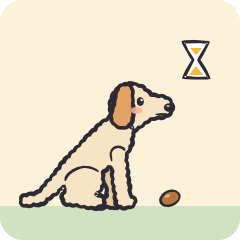 Core skill Impulse Control Being able to pause and let go, even of something precious. Growling over things fades with trading practice.
Exercises
This is the order we recommend — pick the exercises that match when she growls. Each one starts in an easy situation where she doesn’t growl, never in the growl situation itself.
- ExerciseThe Trade Game: Teach Your Dog to Drop It by Swapping, Not GrabbingDoable at home (Steps 1–4 at home)For guarding food or toys. Start by swapping things she doesn’t care much about for an amazing treat.Read →
- ExerciseTouch Then Treat: Help a Dog Who Hates Being Handled Learn to Enjoy ItDoable at home (Steps 1–5 at home)For growling about being touched. Start with a one-second touch somewhere she’s comfortable → treat, and build from there.Read →
- ExerciseChin Rest Training: Teach Your Dog a “Start Button” for Grooming and Vet CareDoable at home (Steps 1–5 at home)For growling during grooming. Gives her a way to say “go ahead” and “wait a moment.”Read →
- ExerciseLook at That (LAT): The Game That Helps Reactive Dogs Stay Calm Around Dogs and PeopleStart at home, finish outside (Step 1 at home)For growling at strangers or other dogs. At a distance where she doesn’t growl, seeing them comes to mean something good.Read →
- ExercisePuppy Socialization: How to Make New Things Good ExperiencesStart at home, finish outside (Steps 1–2 at home)For puppies: pair hands, grooming and strangers with good things early on.Read →
In the moment: do / don’t
Do
- When she growls, stop and calmly move away
- Feed her somewhere quiet; when you walk by, add a treat and keep going
- Trade for things — offer something better
- If the growling is new, see your vet first
Don’t
- Scold or smack her for growling
- Pin her, roll her on her back or grab her muzzle
- Force a bowl or object away from her
- Let children near a dog who is sleeping or eating
When to see a professional
- She has bitten or tried to bite after growling. Talk to your vet, a board-certified veterinary behaviorist or certified applied animal behaviorist (US), or a qualified behaviourist your vet refers you to (UK) — someone who doesn’t use punishment. The Merck Veterinary Manual also advises seeking veterinary help as soon as any signs of aggression appear, because of the risk of injury and of the aggression getting worse
- The growling started suddenly, she growls when one particular spot is touched, or she began growling as she got older. Pain or illness may be behind it — see your vet first
- She’s growling in more situations, or you can’t tell what she’s growling at
- She growls at children. Children find it harder to read a dog’s warning signs, so get help early, and keep children and the dog apart until you do
Go to the root
Don’t stop at the quick fix. Growing the skill underneath makes other problems lighter too.
- Core skill Comfort with Handling
- ExerciseThe Trade Game: Teach Your Dog to Drop It by Swapping, Not GrabbingDoable at home (Steps 1–4 at home)Read →
- ExerciseTouch Then Treat: Help a Dog Who Hates Being Handled Learn to Enjoy ItDoable at home (Steps 1–5 at home)Read →
- ExerciseChin Rest Training: Teach Your Dog a “Start Button” for Grooming and Vet CareDoable at home (Steps 1–5 at home)Read →
Sources
- RSPCA (UK) — Aggression in dogs
- RSPCA NSW — Prevent-a-Bite 2024 Fact Sheet: Growling (PDF)
- RSPCA (UK) — Understanding your dog
- RSPCA (UK) — Children & dogs
- ASPCA — Aggression in Dogs
- ASPCA — Food Guarding
- MSD Veterinary Manual — Behavioral Problems of Dogs
- Merck Veterinary Manual (pet owner version) — Behavior Problems in Dogs
- Jacobs, Coe, Pearl, Widowski & Niel (2018). Factors associated with canine resource guarding behaviour in the presence of people. Preventive Veterinary Medicine
- Herron, Shofer & Reisner (2009). Survey of the use and outcome of confrontational and non-confrontational training methods in client-owned dogs showing undesired behaviors. Applied Animal Behaviour Science 117:47–54
- AVSAB — Position Statement on the Use of Dominance Theory in Behavior Modification of Animals
- AVSAB — Position Statement on Humane Dog Training (2021)
- AVSAB — Positive Veterinary Care Position Statement
- Mills et al. (2020). Pain and Problem Behavior in Cats and Dogs. Animals 10(2):318
- Faragó et al. (2017). Dog growls express various contextual and affective content for human listeners. Royal Society Open Science
- Dogs Trust — Teach your dog to wear a muzzle
- Battersea — Muzzle training your dog
- Best Friends Animal Society — Dog Muzzles: How and Why to Use Them
- The Muzzle Up! Project — Training Your Dog To Wear a Muzzle (PDF)
- The Muzzle Up! Project — Muzzles are a tool, not a green light to ignore criteria
- Behavior Basics: My dog bit someone! What do I do?! (ACVB handout, hosted by The Ohio State University Veterinary Medical Center)
- American College of Veterinary Behaviorists — What is a veterinary behaviorist?
- NASPHV — Compendium of Animal Rabies Prevention and Control, 2016 (JAVMA)
- CDC — About Rabies