 BAUDOG The dictionary of dog–human communication
Contents
- The finished behavior
- Assessment: where is your dog now?
- The cue
- How to signal
- Teaching steps
- When to reward
- What “beg” is — and how it differs from begging and standing on hind legs
- Strain on the back: which dogs shouldn’t learn it
- If a trainer came to your home: today’s session and the homework
- Beg the trick vs. begging for food at the table
- Am I doing it right? (Combos and changing the cue)
- A good sign to move on
- If it isn’t working
- Prescription: a suggested order
- In the moment: do / don’t
- When to see a professional
- Sources
The finished behavior
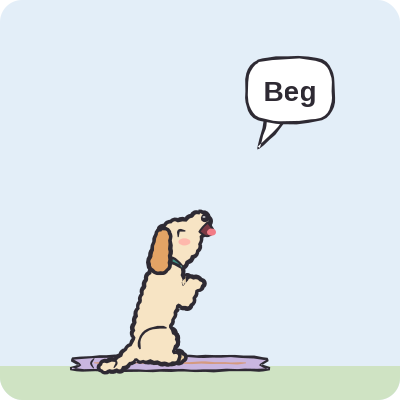
Beg — also called sit pretty or sit up — is your dog sitting with her bottom on the floor, lifting both front paws and raising her upper body. It doesn’t involve big movements, but it takes real core strength and puts load on the lower back. The American Kennel Club advises avoiding it with puppies who are still growing and dogs with a history of back injuries, and BAUDOG doesn’t teach it to those dogs. For a healthy adult, keep sessions short with only a few repetitions; our rule of thumb is that holding it for a few seconds is plenty. Standing up on the hind legs with the bottom off the floor is not sit pretty.
Assessment: where is your dog now?
A visiting trainer might ask about or watch for something like these five things before teaching beg.
How old is she? (A puppy still growing? A senior?)
→BAUDOG doesn’t teach it to growing puppies (the AKC also advises avoiding it). For seniors, we suggest other tricks (see “Which dogs shouldn’t learn it” below).
Has she ever had a back problem, such as a slipped disc (IVDD)? Is she a breed prone to disc disease, like a Dachshund?
→If she has had a back injury, BAUDOG doesn’t teach it. If she’s a high-risk breed, talk to your vet before you start.
Does she sit reliably on cue?
→If not, BAUDOG starts with “Sit” first. Sit pretty begins from a sit.
When she sits, is her back straight? Does she lean to one side?
→Leaning or sitting awkwardly can be a sign of pain in the back or hind legs. See your vet before practicing.
Is she carrying extra weight?
→If so, work on her weight first. Cornell’s veterinary college lists keeping dogs trim as a way to help prevent back problems. Ask your vet how to slim her down.
The cue
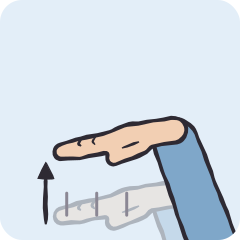
The voice cue is “Beg” (“Sit pretty” works just as well — pick one for the whole family). For the hand signal, BAUDOG uses a smaller, empty-handed version of the lure movement: palm down, a smooth lift from her nose to just above her head. It’s the reverse of the “Down” signal (palm down, moving from up high to low). Release her back to a normal sit with “Sit.”
How to signal
- Voice
Once the upright position is steady, say “Beg” once, just as your hand starts to move. Bring her down with “Sit.”
- Hand
With a treat between your fingers, start at her nose and lift slowly, straight up, only a little. Lift too fast or too high and her bottom comes up and she stands on her hind legs. Once she’s got it, do the same movement with an empty hand and make it gradually smaller.
- Leash
No leash indoors. When you show it outside, keep the leash in your hand.
- Body
Stand or crouch in front of your dog, on a stable, non-slip floor such as carpet. Not on the sofa or the bed.
Teaching steps
- 1
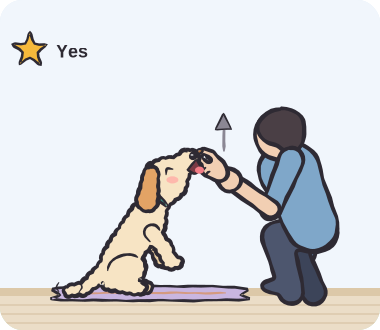
At home, quiet
Front paws lift a little
From a sit, start the treat at her nose and lift it slowly straight up, just a little. The instant both front paws leave the floor: “Yes” → treat.
A good sign to move onHer front paws lift, 8 out of 10 times
- 2
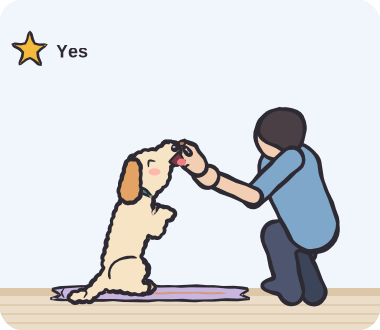
At home, quiet
Bottom down, upper body up
Over several sessions, raise the treat a little at a time. “Yes” when her bottom stays on the floor and her back comes up straight. If her bottom lifts, no reward — start again from a sit.
A good sign to move onUpper body up with bottom on the floor, 8 out of 10 times
- 3
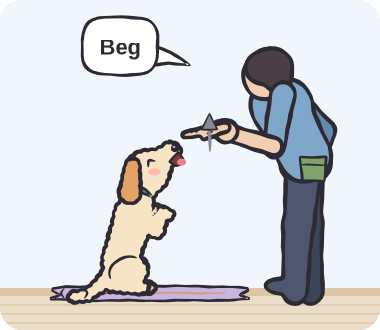
At home, quiet
Add “Beg,” switch to an empty hand
Say “Beg” once, just before your hand moves. Make the same movement with an empty hand; when she sits up: “Yes” → treat from your other hand.
A good sign to move onSits up to “Beg” and an empty hand, 8 out of 10 times
- 4
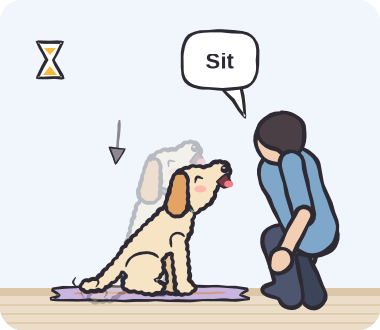
At home, quiet
Hold 1–2 seconds, down on “Sit”
Once she’s up, wait 1 second, then 2, before “Yes.” Then say “Sit,” and when her front paws come down, praise again. Don’t make her hold it for long.
A good sign to move onHolds 2 seconds and comes down smoothly on “Sit,” 8 out of 10 times
- 5
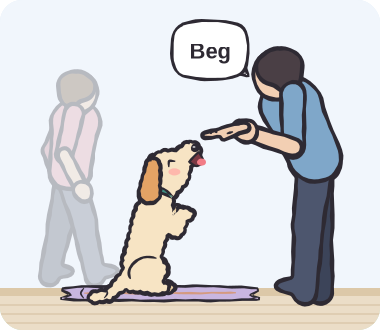
At home, small distractions
With mild distractions
With family around or the TV on. Only a few begs per session.
A good sign to move on8 out of 10 times in that setting
When to reward
Just right
“Yes” the instant both front paws are up and her upper body rises, with her bottom still on the floor.
Too late
“Yes” after her bottom has lifted and she’s standing on her hind legs, or after she has dropped her paws — you end up rewarding the standing up, or the coming down.
What “beg” is — and how it differs from begging and standing on hind legs
Beg is a sit in which your dog keeps her bottom on the floor and raises both front paws. The American Kennel Club, which calls it sit pretty, describes it as the dog using her core muscles to raise her torso onto her haunches, with her front legs curled in front of her. In the AKC Trick Dog program, sit pretty is an Intermediate-level trick — the level where handlers may not use food to lure the dog into position during the test (food is still allowed as a reward afterward).
People call it “beg,” “sit pretty” or “sit up.” Which word you use doesn’t matter, but use one word for this pose and nothing else. If “beg” makes you think of a dog pestering at the table, “sit pretty” is a fine choice.
Standing on the hind legs with the bottom off the floor — or walking on two legs — is a different thing. A veterinarian advising the Japanese pet magazine Inu no Kimochi cautions that standing or jumping on the hind legs can put excessive strain on joints such as the hips and knees, and that walking on two legs as a trick puts a dog in an unnatural posture. BAUDOG doesn’t teach hind-leg standing as a trick.
Strain on the back: which dogs shouldn’t learn it
The AKC calls sit pretty a higher-impact trick even though it doesn’t involve big movements: getting into the position and holding it takes significant core strength and can put pressure on a dog’s joints and back. It advises avoiding the trick with puppies who are still developing and with dogs who have a history of back injuries, and asking your vet if you’re unsure. VCA Animal Hospitals notes that begging or sitting pretty strains an old back. And an exercise guide from the Animal Medical Center, a nonprofit animal hospital in New York, lists “sit up and beg” as core work but says to avoid it if your dog has a history of back problems or is overweight.
Some breeds are prone to disc disease (IVDD). According to the American College of Veterinary Surgeons (ACVS), a group of breeds that includes Dachshunds, Pekingese, Beagles and Lhasa Apsos (vets call them chondrodystrophoid breeds) makes up the vast majority of cases, with Dachshunds alone accounting for 45–70%. An article from Cornell’s veterinary college cites an ACVS estimate of 40–75%. If you want to teach it to one of these breeds, BAUDOG suggests talking to your vet before you start.
Some people recommend sitting pretty as a strengthening exercise. But canine rehabilitation physiotherapist Laurie Edge-Hughes writes that she not only doesn’t recommend it as an exercise — she thinks dogs should stop doing it. Her reasoning: the joints of a dog’s spine are built to take load in ordinary postures — sitting, standing, lying down and walking — not in an upright one. In a 1992 experiment she refers to, with 5 dogs, the force on the lumbar spine’s facet joints was about 185 newtons when standing erect on two legs, far more than in ordinary standing (about 26 N) or walking (up to about 107 N). That experiment didn’t measure the sit-pretty position itself. BAUDOG’s view: don’t use beg as a fitness exercise; if you teach it, keep it a short, fun trick for healthy adult dogs. Deciding not to teach it at all, as this physiotherapist would, is also a perfectly reasonable choice.
Big dogs can find it hard to balance sitting up. In the AKC Trick Dog evaluator guide, a large dog can do sit pretty by sitting and holding a head tilt for at least 3 seconds. Rather than forcing her paws up, you can teach this version instead.
If a trainer came to your home: today’s session and the homework
Here is how a first in-home session might go — one example BAUDOG has put together, not a fixed script. The trainer would first use the five assessment questions to check whether this trick suits your dog at all.
- Today: go through the five questions to check whether it’s OK to teach her. If it is, lift a treat slowly straight up and reward the moment her front paws leave the floor (step 1). The trainer adjusts the speed and height of your hand on the spot.
- Homework: once or twice a day, no more than 3–5 begs per session, on a non-slip floor. Front paws lifting counts as a pass. Don’t lift too high.
- Next visit: does her upper body come up with her bottom on the floor and her back straight? Our rule of thumb: at 8 out of 10, the next homework is the word “Beg” with an empty hand (step 3). If she sits awkwardly or seems reluctant, stop practicing and see your vet.
Beg the trick vs. begging for food at the table
Some dogs raise both front paws or paw at you before meals or treats without ever being taught. Often that’s a request learned because food or attention followed it before — the AKC lists pawing at people among attention-seeking behaviors. The difference from the trick is whether there was a cue.
The quickest way to cut down on begging at the table is to stop giving food from the table. Veterinary Partner, a veterinarian-run site, suggests that if you want to stop table begging, you reward your dog for lying on a mat a little way off, on her own (see “Relaxing on a Mat”).
Teaching the beg trick doesn’t necessarily mean more begging, as long as you reward it only after the cue. Our suggestion: reward beg only when you asked for it, and never answer an uncued sit-up or paw-tapping with food.
Am I doing it right? (Combos and changing the cue)
We looked at ways owners have come up with on their own, through a trainer’s eyes.
- I hold her front paws up to make the shape → We don’t recommend it. It’s harder for her to learn to balance herself, and she tends to end up standing on her hind legs. Lift a treat slowly and reward even a small lift of the paws.
- I want to go “Beg → Wave” or “Beg → High five” → She has to hold the upright position while moving one paw, which adds even more strain. Our suggestion: only with a healthy adult dog, only once each trick is solid on its own, and just once or twice per session. If her back rounds or she wobbles, drop the combo.
- I want to change the cue — from “Beg” to “Sit pretty,” say → Say the new word, pause briefly, then give the old cue and hand as usual, and reward when she sits up. If you say both at the same moment, she won’t learn the new word.
- I want her to hold it as long as possible → Rather than holding longer, aim for popping up smoothly on cue and coming down smoothly on “Sit.” Our rule of thumb: a few seconds at most.
- I’d like her to stand and walk on her hind legs from the beg → BAUDOG doesn’t teach it — the veterinarian quoted above cautions that walking on two legs as a trick puts a dog in an unnatural posture.
A good sign to move on
- Steps 1–2: when her upper body comes up with her bottom on the floor 8 out of 10 times, move to the word and an empty hand (our rule of thumb)
- Steps 3–4: when “Beg” gets her up, she holds 2 seconds and comes down on “Sit” 8 out of 10 times, practice with mild distractions (our rule of thumb)
- If her bottom lifts or her back rounds, lower your hand and go back one step — our rule of thumb is two misses in a row
If it isn’t working
Her bottom comes up and she stands on her hind legs
This is the most common snag. The AKC says it usually means you’re raising your hand too quickly or a bit too high. Slow your hand down and keep it a little lower. Don’t reward the reps where her bottom lifts; start again from a sit.
Her front paws won’t leave the floor
Keep the treat touching her nose and lift it just an inch or two (a few cm), praising the slightest lift. Some dogs, including many terriers, sit up on their own. With those dogs, simply rewarding the moment she does it (capturing) can be enough to teach it.
She wobbles and drops her paws straight away
A slippery floor, a sofa or a bed isn’t stable. Start again on a steady floor like carpet, and aim for a 1-second hold. If the wobbling continues or she sits awkwardly, consider pain in the back or hind legs and talk to your vet.
She sits up before meals without being asked
Food may have appeared after she did it before, so she has learned to ask that way. Don’t answer uncued sit-ups with food; before meals, reward “Say Please by Sitting” or waiting on her mat instead.
She only does it if she can see a treat
Change it step by step: treat in hand → the same movement with an empty hand → a smaller movement. Hand over the treat from your other hand. Not showing the treat isn’t the same as not rewarding.
Prescription: a suggested order
The foundations for beg, and practices for when begging becomes a problem.
- ExerciseCharging Your Marker Word: How to Teach Your Dog That “Yes” Means a RewardDoable at home (Steps 1–4 at home)So “Yes” can mark the moment her upper body comes up with her bottom still on the floor.Read →
- ExerciseSay Please by SittingDoable at home (Steps 1–3 at home)A different way to ask, for a dog who begs with her paws or with sit-ups nobody asked for.Read →
- ExerciseRelaxing on a Mat: How to Teach Your Dog to SettleDoable at home (Steps 1–4 at home)To cut down on table begging — so she can relax on her mat while the family eats.Read →
In the moment: do / don’t
Do
- Check age, back history and breed before teaching
- Use a non-slip floor and lift the treat slowly, only a little
- “Yes” the instant she’s up with her bottom down
- Only a few reps per session; hold for a few seconds at most
Don’t
- Teach it to a growing puppy or a dog with a back injury (the AKC also advises against it)
- Hold her paws up to make the shape
- Reward standing or walking on her hind legs
- Answer begging or sit-ups at the table with food
When to see a professional
- She doesn’t want to turn her head to one side, walks unsteadily, or her hind legs seem weak. These can be signs of disc disease. Stop practicing and see your vet straight away
- She doesn’t want to sit, sits awkwardly or leans to one side. This can be pain in the back or hind legs. Talk to your vet before practicing
- You want to teach it to a breed prone to disc disease (Dachshund, Toy Poodle, Pekingese, Beagle and others), a senior dog, or a dog carrying extra weight. Talk to your vet before you start
The skills behind this command
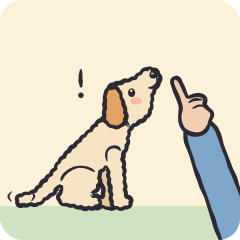 Core skill Understanding Cues Up on “Beg,” down on “Sit” — telling two cues apart in a row.
 Core skill Impulse Control Keeping her bottom on the floor even with a treat right in front of her nose. The same skill helps cut down begging.
- ExerciseCharging Your Marker Word: How to Teach Your Dog That “Yes” Means a RewardDoable at home (Steps 1–4 at home)Read →
- ExerciseSay Please by SittingDoable at home (Steps 1–3 at home)Read →
- ExerciseRelaxing on a Mat: How to Teach Your Dog to SettleDoable at home (Steps 1–4 at home)Read →
Sources
- American Kennel Club — Teach Your Dog to Sit Pretty (Sassafras Patterdale, CPDT-KA)
- American Kennel Club — AKC Trick Dog Participant and Evaluator Guide (PDF)
- VCA Animal Hospitals — Can Old Dogs Learn New Tricks?
- Animal Medical Center (New York) — Exercise Tips for Your Dog (PDF)
- Battersea Dogs & Cats Home — How to teach your dog to lie down
- American College of Veterinary Surgeons — Intervertebral Disc Disease
- Cornell Riney Canine Health Center — Intervertebral disc disease
- Canine Fitness Centre (Laurie Edge-Hughes, animal physiotherapist) — Stop Sitting Pretty!
- Buttermann et al. (1992). In vivo facet joint loading of the canine lumbar spine. Spine 17(1):81–92 (PubMed abstract)
- American Kennel Club — How to Identify and Stop Attention-Seeking Behavior in Dogs
- Inu no Kimochi Web Magazine (veterinarian-supervised, Japanese) — Why standing on two legs and jumping can be risky for dogs
- Inu no Kimochi Web Magazine (Japanese) — How far is it safe to let dogs jump up or walk on two legs? A vet answers
- Veterinary Partner (VIN) — Capturing Desirable Behaviors
- Veterinary Partner (VIN) — How To Fade the Lure in Training
- Cornell Riney Canine Health Center — Recognizing pain in dogs
- Dogmantics (Emily Larlham) — Adding a verbal cue or changing a cue
- Smart Dog University — How to Clean Up Cues and Transfer Cues
- Karen Pryor Clicker Training — Making the Connection: Behavior Chains
- Demant et al. (2011). The effect of frequency and duration of training sessions on acquisition and long-term memory in dogs. Applied Animal Behaviour Science 133