 BAUDOG The dictionary of dog–human communication
Contents
When to use this exercise
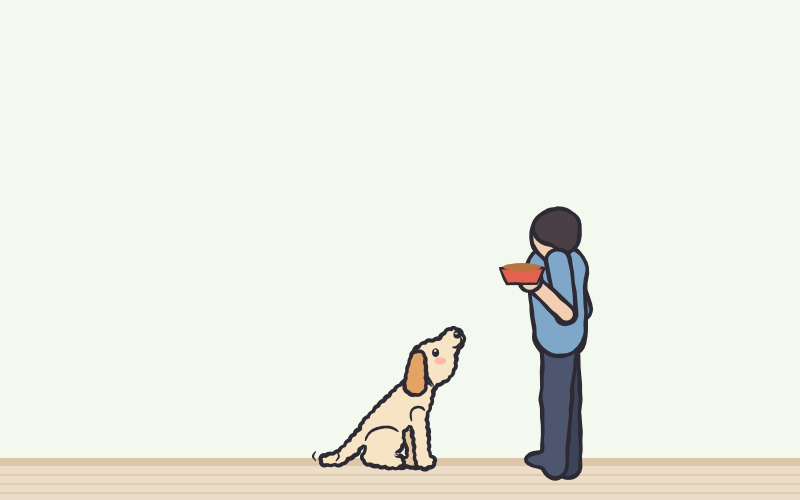
Barking before dinner, jumping when the leash comes out, bolting when the door opens, barking for you to throw the ball — in every case she hasn’t yet learned to pause in front of something she wants. This practice swaps her way of asking for a sit. What it builds is impulse control. Start indoors with a treat and her food bowl, then spread it to everyday moments, the front door, and greeting people.
GoalWhen she wants something, she sits and waits — on her own, without being asked.
Assessment: what a trainer might check on the first visit
Before starting, a visiting trainer might check three things indoors, like these.
When you stand holding a treat, what does your dog do? (Jump, bark, paw at you, or sit?)
→If she doesn’t sit, start at step 1. If she can’t sit even when asked, teach sit first.
Does she bark or jump before meals, walks or ball games?
→Those moments go on the homework list. Start with the one that happens most every day — usually dinner.
Does anyone in the family hand over what she wants when she barks or jumps?
→If so, getting everyone onto the same rule becomes part of the homework.
What you need
- Small treats she can eat in a second (pieces of her daily kibble are fine)
- A reliable “sit” — indoors, she sits on one cue (if not, teach sit first)
- Things your dog wants: her food bowl, her leash, a favorite toy
How to signal
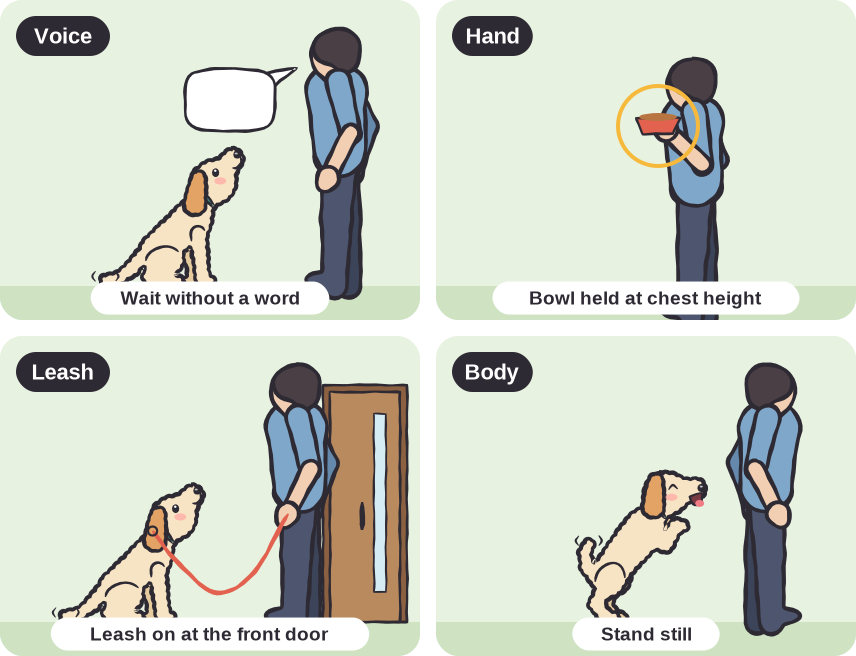
- Voice
At first, say nothing — wait for your dog to sit on her own. Only if she really can’t work it out after you’ve waited, say “Sit” once. When she sits, “Yes.”
- Hand
Hold the treat or bowl at chest height, out of her reach. When she sits, bring it toward her; if she stands, it goes back up.
- Leash
No leash indoors. For the front-door step, keep the leash on.
- Body
Stand still, like a statue. If she jumps on you, don’t push her off or lift a knee — turn your back or walk away.
Today’s session
With the trainer, you work on step 1.
Step 1With a treat(At home, quiet)
The trainer shows you once, then hands over. Hold a treat and stand there, saying nothing. The moment your dog sits, “Yes” → treat. Take a few steps back so she gets up to follow, then wait again. Five to ten times. The trainer watches for pushing her away when she jumps and for bringing the treat out before she sits, and fixes them on the spot. Then you try step 2 together with that day’s food bowl.
Homework until the next visit
- How often
- Several times a day (the sit-for-a-treat game), plus before every meal
- How long
- About 1–3 minutes each
- How much
- 5–10 reps per round of the sit-for-a-treat game
A good sign she’s readyShe sits on her own, without being asked, in three or more different situations — say dinner, the leash and the ball (our rule of thumb)
What the trainer checks next visit
In front of the trainer, stand holding her food bowl, then her leash. Say nothing and wait.
If she canIf she sits on her own for both → next stage: step 4 (at the front door) becomes the next homework.
If not yetGo back to one situation (the food bowl). Look together at the timing of raising and lowering the bowl, and whether the treat comes out before she sits, and keep going for another week.
Next stages: steps
- 1
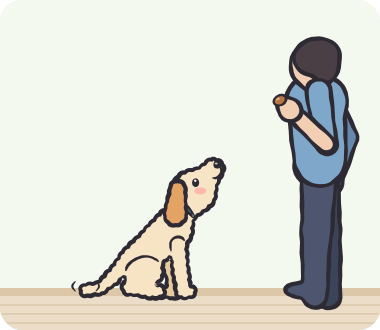
Say nothing, and wait At home, quiet
With a treat
Hold a treat, stand, and say nothing. The moment she sits, “Yes” → treat. Step back a few paces so she follows, then wait again. Once she sits quickly every time, start rewarding every 1–3 sits instead of every one.
A good sign to move onWhen you stand and wait, she sits on her own straight away, 8 out of 10 times (our rule of thumb)
- 2
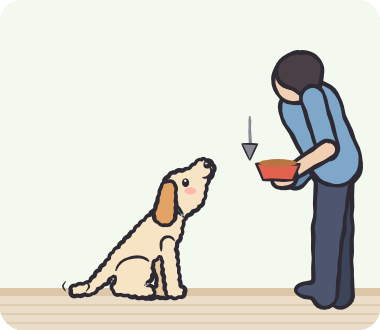
Sit, and it comes down At home, quiet
With her food bowl
Stand holding the bowl. When she sits, start lowering it. If she stands up, raise it back to chest height. If she stays sitting until it’s on the floor, “Free” — she can eat.
A good sign to move onWhen you stand with the bowl, she sits on her own and waits until it’s on the floor, 8 out of 10 times (our rule of thumb)
- 3
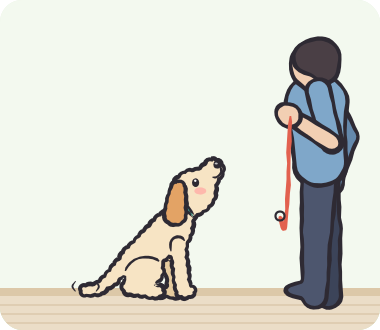
The leash comes when she sits, too At home, small distractions
More everyday moments
Use the same rule before the leash goes on, before you throw a toy, before she’s petted, before she comes out of her crate, and before she gets out of the car. If she jumps, put the leash or toy away, wait about a minute, and try again. When she sits, hand it over straight away.
A good sign to move onShe sits on her own, without being asked, in three or more situations (our rule of thumb)
- 4
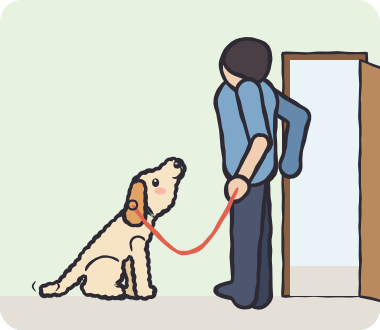
Stand up, and it closes Yard, doorstep, outside the house
At the front door
Go to the front door with her leash on. Wait until she sits, then start opening the door. If she stands, close it. If she stays sitting with the door wide open, “Free” — out you go. At first, open the door only a few inches.
A good sign to move onShe stays sitting while the door opens all the way, 8 out of 10 times (our rule of thumb)
- 5
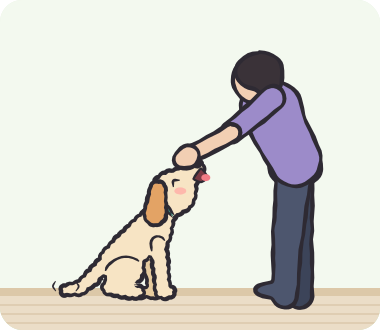
Sit, and she gets petted Around distractions
Greeting people
Ask family or friends to help. While she sits, they come over and pet her. If she stands up or jumps, they take a step back. With real visitors, keep her leash on.
A good sign to move onShe stays sitting as someone approaches, 8 out of 10 times (our rule of thumb)
Timing
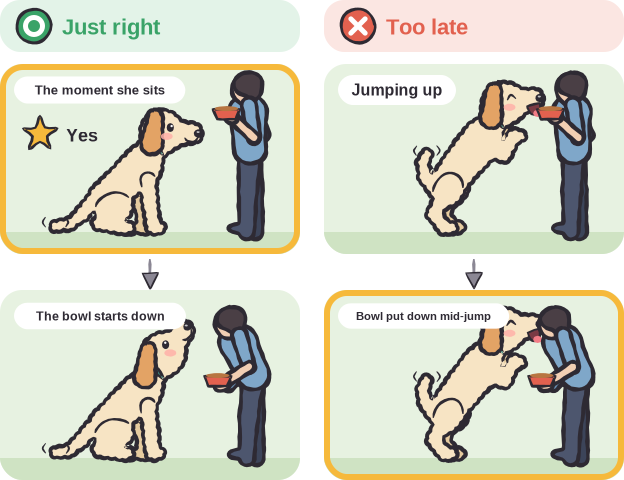
Just right
Say “Yes” the moment her bottom touches the floor — and the treat (bowl, leash, door) starts coming her way right away.
Too late
Putting the bowl down while she’s jumping or barking. That teaches her that jumping and barking get the bowl.
While she’s learning, hand it over the instant she sits — don’t make her wait. The Oregon Humane Society says the same: the reward should be immediate at first. Longer waits come later, once she sits quickly.
How much and how often
The sit-for-a-treat game: up to 5–10 reps (1–3 minutes), several times a day. Everyday moments — meals, the leash, the door — every time. You don’t need any special training time to keep it going.
If it isn’t working
She just won’t sit
Wait, saying nothing. If she jumps or barks, turn your back or walk away, wait about a minute, and try again. Only if she still can’t work it out, say “Sit” once. Keep at it, and she’ll start sitting without being asked.
She sits and pops straight back up
While she’s learning, it’s fine to hand over the reward the instant she sits. Once she sits quickly, give a few more treats one after another while she stays sitting, to stretch the time.
Someone in the family gives in when she barks
Get everyone on the same rule. Write it down and put it up: “She sits, she gets it. While she’s barking or jumping, she doesn’t.”
Does she have to sit for everything? Isn’t that a bit mean?
It isn’t about making her obey. It’s a clear way to show her how to ask and get what she wants. The American Veterinary Society of Animal Behavior (AVSAB) recommends rewarding good behavior and using the things a dog wants as rewards, rather than trying to dominate her. Predictable responses from you lower anxiety and build self-control — once she knows sitting works, waiting gets calmer too.
How long do I keep using treats?
Once she sits quickly, reward with treats every 1–3 sits. Everyday rewards — dinner, walks, the ball, being petted — you use every time.
Avoid
- Handing over what she wants while she’s jumping or barking
- Kneeing her, stepping on her paws, or pushing her away
- Saying “Sit, sit, sit” over and over
- Making her hold the sit for ages after she sits (while she’s learning)
A good sign to move on
- Steps 1–2 (treat, food bowl): when you stand and wait, she sits on her own, 8 out of 10 times
- Step 3 (everyday moments): she sits without being asked in three or more situations
- Steps 4–5 (front door, greeting people): 8 out of 10 times in that situation
- If she struggles, go back one step (our rule of thumb: two misses in a row)
Sources
- Oregon Humane Society — Sit to Say “Please”
- Sophia Yin, DVM, CAAB (2012). The Learn to Earn Program: Implementing the Program (CattleDog Publishing)
- Peninsula Humane Society & SPCA — Teaching a dog not to dart out the open door
- Oregon Humane Society — Wait
- American Kennel Club — How to Teach Your Dog to Wait at Doorways
- MSD Veterinary Manual (for veterinarians) — Behavior Problems of Dogs
- AVSAB — Position Statement on the Use of Dominance Theory in Behavior Modification of Animals
- AVSAB — Position Statement on Humane Dog Training (2021)
- ASPCA — Barking
- Whole Dog Journal — The 3 Reasons Dogs Ignore Our Cues (Nancy Tucker, CPDT-KA)