 BAUDOG The dictionary of dog–human communication
Contents
- In short
- When it happens
- How your dog feels
- Why do dogs eat poop? What the research says
- Why is my dog suddenly eating poop? Rule out health problems first
- If a trainer came to your home: the first session and the first homework
- Take away the chance (the most important step)
- Call her the moment she’s done — and make it worth it
- Don’t scold, chase or muzzle
- Do pineapple, supplements or “poop-eating deterrents” work?
- Will my puppy grow out of eating poop?
- Is eating poop bad for dogs?
- The missing core skill
- Exercises
- In the moment: do / don’t
- When to see a professional
- Sources
In short
Eating poop is gross to us but common in dogs. In a large survey of mostly US owners, 16% of dogs had been seen eating dog poop at least six times, and nearly one in four at least once. In nursing mothers and young puppies it’s a natural behavior. The same research found that chasing the dog away, lacing poop with pepper, punishing with a shock or noise collar, and 11 products sold to stop poop eating almost never worked — owners reported success only 0–2% of the time. So the core of the fix is removing the chance to do it: go out with your dog every time she poops, call her to you the moment she’s finished for a really special treat, and pick it up while she eats it — a routine recommended by veterinary behaviorists and by PDSA, the UK veterinary charity. Don’t scold. If an adult dog starts suddenly, or is losing weight, vomiting, has diarrhea or seems ravenous, see your vet first.
When it happens
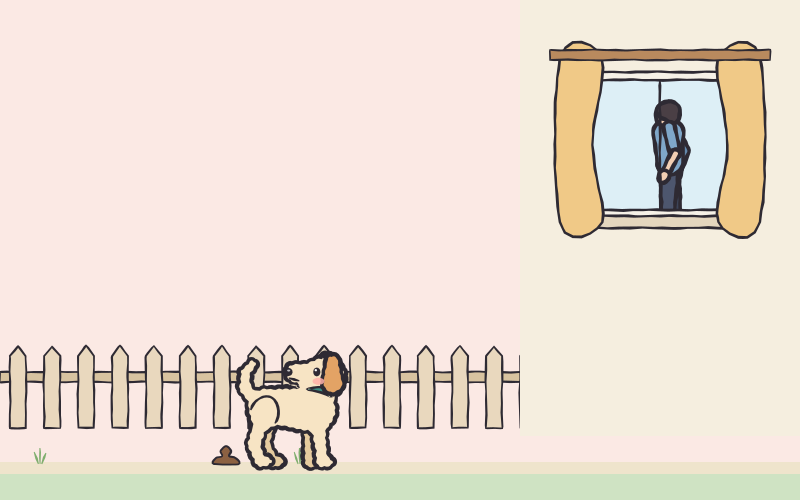
- Your dog finishes pooping in the yard, then turns straight around to eat it
- On walks, she makes a beeline for other dogs’ poop
- She raids the cat’s litter box for “snacks”
- You come home and the poop in her pen or crate has vanished
- She seems to love goose, rabbit or horse droppings on country walks
How your dog feels
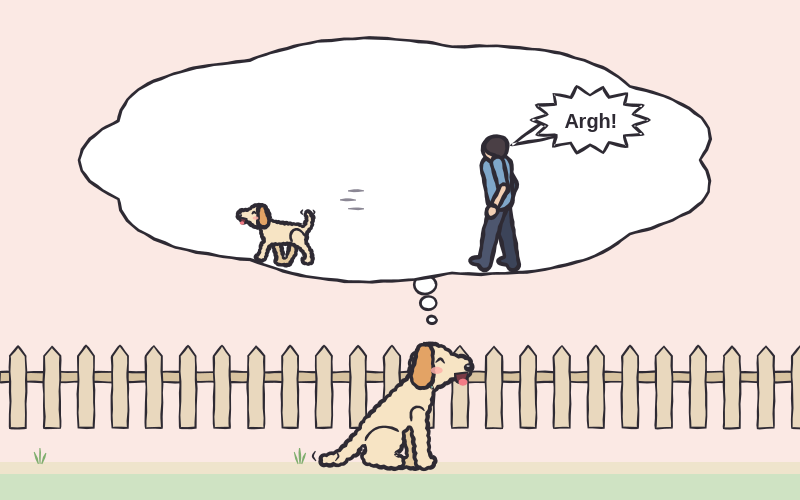
A nursing mother dog licks up her puppies’ poop to keep the nest clean. Puppies explore the world with their mouths, and poop is one more thing to investigate. For both, it’s a normal dog behavior, however much we wish it weren’t.
Most dogs who eat poop go for fresh poop — in one survey, 85% ate poop no more than two days old. The researchers who found this suggest it may be inherited from wolves, which would have removed fresh droppings from the den area before parasite eggs in them became infective. It’s an interesting idea, but still only a hypothesis.
Then there’s what happens next. If eating poop makes you shout and run over, some dogs learn that it’s a great way to get your attention — even scolding is attention. Others gulp it down faster so you can’t take it away. A veterinary behaviorist writes that some dogs take the yelling as an excited invitation to play, and that dogs who were repeatedly punished for accidents in the house may learn to eat their poop.
Long hours shut in a small space, boredom and anxiety can also lead to poop eating.
Why do dogs eat poop? What the research says
One large study is by Dr. Benjamin Hart and colleagues at the University of California, Davis, published in 2018. They ran two online surveys in 2010–11; about 90% of replies came from the United States. In the first (1,552 owners; 1,441 answered the poop-eating questions), 16% of dogs had been seen eating other dogs’ poop at least six times, 7% one to five times, and 77% never. Poop eating was more common in greedy eaters and in homes with two or more dogs. Terriers and hounds were the most likely breed groups; among single breeds with enough dogs to compare, Shetland Sheepdogs were overrepresented (41% of 27 dogs) and none of the 29 Poodles ate poop.
Some popular explanations didn’t hold up. The dog’s diet wasn’t related — most dogs in both groups ate mainly kibble — and poop eaters were just as easy to house-train as other dogs. Frequent poop eaters weren’t younger than other dogs, either: about three in four were over four years old.
The second survey asked 1,475 owners of frequent poop eaters what they had tried. 85% of their dogs ate fresh poop, no more than two days old. Chasing the dog away, lacing poop with pepper and punishing with a shock or noise collar each “worked” for 1–2% of owners; rewarding the dog for leaving it on a “leave it” cue worked for 4%. The 11 products sold to stop poop eating ranged from 0% to 2%. These are owner reports: the study couldn’t check whether owners followed the product directions, or whether the training was guided by a professional.
The honest takeaway: don’t expect any single trick to fix poop eating. Make management — keeping her away from poop and picking it up fast — the foundation, and build the training on top of it.
Why is my dog suddenly eating poop? Rule out health problems first
Poop eating occasionally has a medical cause. The MSD Veterinary Manual says medical causes should be ruled out first for any eating problem, and notes that digestive-tract problems can lead dogs to eat non-food things, and that diseases such as Cushing’s disease, and medicines such as steroids, can increase appetite. PDSA lists not being fed enough, a sudden increase in exercise, and health conditions or medications that make a dog extra hungry. The San Francisco SPCA says to always rule out hunger, poor absorption of food and other medical reasons, and to ask your vet about the right amount of food. The American Kennel Club also mentions parasites, diabetes and thyroid disease, and a veterinary behaviorist writing for PetMD mentions inflammatory bowel disease.
See your vet promptly if an adult dog who never used to eat poop suddenly starts, especially with weight loss, low energy, vomiting or diarrhea. A stool test can find intestinal parasites. If your dog eats only one particular dog’s poop, PDSA suggests having that dog checked too.
One more thing worth knowing: a dog who eats poop can carry other animals’ parasite eggs straight through her gut. In a study by veterinary researchers at Utrecht University in the Netherlands, who tested dogs’ stool monthly for a year, about half (49%) of samples that were positive for roundworm eggs were negative when retested after the owner had kept the dog from eating poop for three days. Our suggestion: tell your vet that your dog eats poop, so they can read a stool test with that in mind.
If a trainer came to your home: the first session and the first homework
Here is how we’d expect a first in-home session to go — one example, not a fixed script. For example, a trainer might ask whose poop she eats (her own, other dogs’, the cat’s), when and where it happens, whether someone is with her when she goes, and how the family reacts when they catch her. They’d also check whether she’s been seen by a vet.
- Today: go out with your dog when she needs to poop. The moment she finishes, call her name once, brightly, and when she comes, give her a treat she only ever gets at this moment. While she’s eating it, someone else picks up the poop. Then do 10 reps of step 1 of Leave It (she moves her nose away from a treat in your closed fist).
- Homework: be with her every time she poops — in the yard too, on leash if she’d head straight back to it. When she’s done, call her, reward with the special treat, and pick it up while she eats. Move the cat’s litter box out of her reach. Practice Leave It twice a day, 3–5 minutes at a time. If she does get to some poop, don’t scold; just clean it up quietly.
- Next visit: the trainer checks whether one call is enough for her to leave the poop and come to you. Our rule of thumb: once she comes 8 out of 10 times, the next homework moves to walks — passing other dogs’ poop on a shortish leash. If she doesn’t, go back to going out on leash and leading her a few steps away before you call.
Take away the chance (the most important step)
- Pick up poop right away. Don’t leave it in the yard or her pen.
- Be there when she poops. If she tends to go straight back for it, keep her on leash and lead her away as soon as she’s finished.
- If you have a cat, put the litter box where your dog can’t reach it — behind a baby gate or a door only the cat can get through, or up on a high surface.
- Give her plenty of exercise and things to do: games, walks, puzzle toys and food toys at home. The San Francisco SPCA recommends this for poop eaters, and PDSA lists boredom as one of the main reasons dogs do it.
- Puppy eating poop overnight? PDSA suggests taking her out as late as possible before bed, giving her a place to poop at night away from where she sleeps, and getting up early to let her out.
- If she eats poop while you’re out, our suggestion is to adjust meal and walk times so she has a chance to poop before you leave.
Call her the moment she’s done — and make it worth it
One routine veterinary behaviorists recommend is simple: as soon as she’s finished pooping, call her to you for a treat, then pick it up while she eats — or toss a toy for her to chase. PDSA gives the same routine: supervise even quick potty trips in the yard, call her back enthusiastically as soon as she heads for poop, give her something more interesting (a treat, a game, lots of praise and attention), and pick the poop up. The San Francisco SPCA likewise says to go with your dog on every potty trip, clean up straight away, and, where she’s off leash, reward her well for coming away when you call.
The reward has to beat the poop — PDSA calls it “high value.” Our suggestion: pick one extra-special treat that she gets only for this. Her everyday kibble rarely wins against poop.
Practicing The Name Game and Leave It at home gives you the skills for this moment. But as the survey shows, training on its own rarely stops poop eating. Keep it going alongside management, not instead of it.
Don’t scold, chase or muzzle
If you catch her in the act, don’t shout or chase her — clean up quietly. Punishment can make dogs afraid of you, and some dogs learn to eat poop because of it. Never rub her nose in poop: the San Francisco SPCA says it won’t teach her anything and may make her scared of you.
Don’t punish house-training accidents, either. Teach where to go by rewarding her for getting it right.
PDSA also advises against muzzles for poop eating: a muzzle doesn’t stop her wanting the poop, and she’ll often still try — which can be very messy.
Do pineapple, supplements or “poop-eating deterrents” work?
Probably not. In the survey above, owners who had tried any of 11 products sold to stop poop eating reported success only 0–2% of the time. The San Francisco SPCA notes that there are no studies showing taste-deterrent products work, and a handout based on material by two veterinary behaviorists points out that most dogs either get used to the taste or learn to avoid only the treated poop.
Pineapple is the most popular home remedy. PDSA says there is no evidence it works (it’s fine for dogs to eat, but introduce it slowly, as any sudden change of diet can upset the stomach). The same behaviorists’ handout lists papaya, yogurt and cottage cheese among remedies that have never been proven effective. We didn’t find any study showing that pineapple, pumpkin or any other food stops poop eating. Before you spend money, get the whole family doing “be there and pick it up” consistently.
If you think she may be hungry, ask your vet whether she’s getting the right amount of food — PDSA lists underfeeding and a sudden jump in exercise among the reasons dogs eat poop.
Will my puppy grow out of eating poop?
Often, yes. PDSA says puppies who eat their own poop out of curiosity usually stop as they grow up, and the San Francisco SPCA says puppies often grow out of it as they mature — but some never do. It isn’t only a puppy habit: in the UC Davis survey, frequent poop eaters were no younger than other dogs. So don’t wait it out. Pick up promptly, go out with her, and reward her for coming to you after she poops, starting now.
Is eating poop bad for dogs?
Eating her own poop is unpleasant but, according to PDSA, doesn’t often cause health problems. Other animals’ poop is a different matter: it can carry parasites and harmful bacteria. On walks, keep the leash short where other dogs go, and call her and reward her before she reaches it. In the countryside, PDSA’s advice for livestock droppings is simply to walk her away. (For everything else she tries to eat off the ground, see our page on scavenging.)
The missing core skill
Exercises
The order we recommend. Start both indoors, then use them for the “call her and treat” routine after she poops.
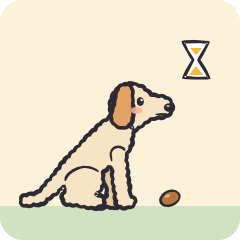
- ExerciseLeave It Practice: From a Closed Fist to Food on the SidewalkDoable at home (Steps 1–3 at home)She learns to move her own nose away from something tempting — the skill she needs in front of poop.Read →
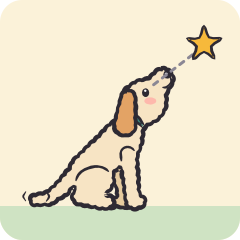
- ExerciseThe Name GameDoable at home (Steps 1–2 at home)One call of her name and she turns to you. This becomes your signal the moment she’s done.Read →
In the moment: do / don’t
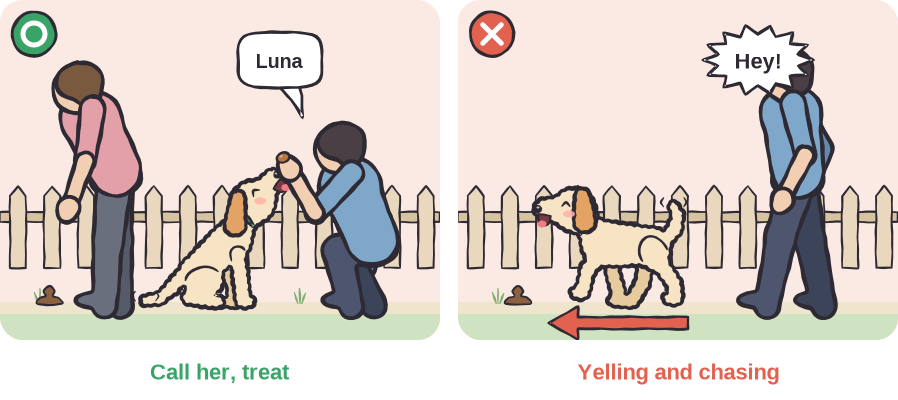
Do
- Pick up poop straight away
- Go out with her every time she poops (on leash in the yard if needed)
- Call her the moment she’s done and give a treat she gets only then
- Keep the litter box out of her reach
- Give her plenty of exercise, games and puzzle toys
Don’t
- Shout at her or chase her
- Punish house-training accidents or rub her nose in poop
- Lace poop with pepper (in the big survey, it worked for 1–2% of owners)
- Rely on a muzzle or a supplement instead of picking up
- Rely on training alone when she shows signs of illness
When to see a professional
- An adult dog who never ate poop suddenly starts — see your vet soon, especially with weight loss, low energy, vomiting or diarrhea
- She seems ravenous or is drinking much more water than usual — some diseases increase appetite
- It started after she began a medicine such as steroids — some medicines increase appetite, so talk to the vet who prescribed it
- She eats only one particular dog’s poop — have that dog checked by the vet too
- She spends long hours confined or is very anxious when left alone — rethink her routine, and talk to your vet or a qualified behavior professional
Go to the root
Don’t stop at the quick fix. Growing the skill underneath makes other problems lighter too.
Sources
- Hart, Hart, Thigpen, Tran & Bain (2018). The paradox of canine conspecific coprophagy. Veterinary Medicine and Science 4(2):106–114
- Nijsse, Mughini-Gras, Wagenaar & Ploeger (2014). Coprophagy in dogs interferes in the diagnosis of parasitic infections by faecal examination. Veterinary Parasitology 204:304–309
- MSD Veterinary Manual (professional version) — Behavior Problems of Dogs
- MSD Veterinary Manual (pet owner version) — Behavior Problems in Dogs
- PDSA — Why do dogs eat poo?
- San Francisco SPCA — Poop Eating
- Humane Society of Missouri — Dog Behavior Problems: Coprophagia (client handout based on material by Debra Horwitz, DVM, DACVB & Gary Landsberg, DVM, DACVB)
- PetMD — Why Do Dogs Eat Poop? (Wailani Sung, DVM, DACVB)
- American Kennel Club — Why Dogs Eat Poop and How to Stop It
- MSD Veterinary Manual (pet owner version) — Gastrointestinal Parasites of Dogs
- MSD Veterinary Manual (pet owner version) — Disorders Caused by Bacteria in the Digestive System of Dogs
- AVSAB — Position Statement on Humane Dog Training (2021)
- Dogs Trust — Top ten dog training tips
- RSPCA (UK) — Teach your dog to stay
- East Bay SPCA — Nose Targeting (PDF)