 BAUDOG The dictionary of dog–human communication
Contents
- In short
- Common at this age
- Your dog at this age
- Assessment: where is your dog now?
- Puppy training schedule: what to teach, in order (BAUDOG’s recommendation)
- How this compares with other puppy training schedules
- Why this order
- If a trainer came to your home: day one and the first homework
- A daily puppy schedule
- How many commands does a puppy need to know?
- A good sign to move on
- Skills to build now
- Exercises
- At this age: do / don’t
- When to see a professional
- Sources
In short
Teach two things first: a marker word — “Yes” means a treat is coming — and her name. “Yes” becomes the word that says “that’s right” in every lesson that follows, and her name is how you get her attention before any cue. From the same day, potty trips, making the crate a cozy bed, getting used to being handled and good first experiences with new things (socialization) start as part of daily life. The first “command” comes after that: sitting to ask for the things she wants. Then, a little at a time, coming when called, trading (drop it), wait, down and walking on a loose leash. The order matters more than the number of commands. Once the basics are in place, you can work on several things side by side.
Common at this age
- Your new puppy just came home and you have no idea where to start
- One site says “5 basic commands,” another says 6, another says 10
- Should “sit” really be the first thing you teach?
- Potty training, the crate, nipping — everything feels urgent at once
- You looked for a week-by-week puppy training schedule and found a dozen different ones
Your dog at this age
Veterinary behavior specialists writing for VCA Animal Hospitals put it simply: your puppy is learning during every waking moment, and every interaction with her is a form of training. House training, household manners and social experiences all start the first time she comes home — whether or not you call it “training.”
Puppies also sleep a lot. The American Kennel Club says they usually sleep 18 to 20 hours a day; the UK’s Royal Kennel Club says puppies of 4–12 weeks need 15–20 hours. So lessons fit into the short times she’s awake, a few minutes at a time. Picking an order and adding one thing at a time is kinder to her than cramming everything into the first week — and easier for you.
Assessment: where is your dog now?
Where you start depends on what she can already do. Check these five things.
Will she calmly take a treat from your hand?
→If not, settling in comes first. Give her a quiet place to rest, don’t overwhelm her with new things, and give her time before you start lessons.
When you say “Yes,” does she look at you straight away?
→If not, the very first practice is Charging Your Marker Word.
In a quiet room at home, does she turn when you say her name once?
→If not, the next practice is The Name Game.
Is she peeing in the right place more and more often?
→Take her out when she wakes up, after she eats and after play, and praise her right there when she goes (see our potty training guide).
Is she relaxed about being touched all over?
→If there are places she doesn’t like being touched, do a little touch → treat every day (practice: Touch Then Treat).
Puppy training schedule: what to teach, in order (BAUDOG’s recommendation)
Many puppies go home at around 8 weeks: in England, licensed breeders may not sell a puppy under 8 weeks old. In the US, a federal rule bars shipping puppies in commerce before they’re 8 weeks old and weaned, and about 27 states and D.C. have their own minimum age for selling, transferring or bringing in puppies — usually 8 weeks, though many of these laws cover only pet stores, dealers or certain breeders.
So the ages below assume she came home at about 8 weeks. They’re rough guides, not deadlines. Don’t wait for one stage to be “finished” before adding the next — add each new thing as soon as the one before it is going well. If she came home older, still start at step 1; you’ll simply move through the parts she already knows more quickly.
- 1. Day one (about 8 weeks): the marker word “Yes” and her name. Both in a quiet room at home, a few minutes at a time.
- 2. From the same day, as part of daily life: potty trips (when she wakes up, after she eats, after play); making the crate a safe, cozy bed — the AKC also suggests starting alone-time practice right away, walking away for just a few seconds at first; getting used to being touched; and pairing new sounds, people and things with good stuff (socialization). The key window for socialization is the first three months of life, so don’t put it off.
- 3. From week 1–2 at home (about 9–10 weeks): sitting to ask for what she wants — before meals, toys and being picked up. This is her first lesson in self-control.
- 4. Then, a little at a time (from about 10–12 weeks, carrying on to around 6 months): hand target (touch), recall games (come), trading (drop it), wait and down.
- 5. Once walks begin: loose-leash walking, starting indoors by walking at your side.
- 6. By about 6 months: the goals the AKC lists for this age are knowing when play stops (and following “drop it”), steady progress with going potty in the right places, coping with being left alone for short periods, loving to come when called, and sitting first to ask for her favorite things.
- 7. By about 1 year: the AKC’s goals are sit, down and stay even with distractions, coming when called, loose-leash walking, and drop it and leave it.
- When to trainWhen to Start Training a Puppy: What to Do From Day One, Plus an Age-by-Age Guide→
- ExercisesPuppy Socialization: How to Make New Things Good Experiences→
- ProblemsPotty Training a Puppy (or an Adult Dog): A Trainer’s Plan for Fewer Accidents in the House→
- CommandsCrate Training: How to Teach Your Dog to Go in on Cue and Wait for “Free”→
How this compares with other puppy training schedules
Published schedules differ in the details. VCA Animal Hospitals’ age-by-age schedule, for example, starts potty training, crate training, name recognition, “sit” and “come” at 7–8 weeks, adds “down” and having her sit and wait for her meals at 10–12 weeks, and “stay” and “leave it” at 3–4 months. The overall order is close to ours. The main difference is that we put the marker word “Yes” before everything else, because it’s how you’ll tell her “that’s right” in all of those lessons.
Why this order
- “Yes” first: every lesson starts with being able to tell her “that’s it.” Both the American Kennel Club and the UK’s Dogs Trust advise teaching your dog what the marker means before you use it to teach new behaviors (see Marker training).
- Her name next: a cue only works once she’s looking at you. If her name means “turn around — good things happen,” it also sets up coming when called: recall guides from Dogs Trust and the AKC teach the name first.
- Potty, crate and socialization don’t wait: the VCA behavior specialists count house training, household manners and social experiences as training from the day she comes home. Dogs Trust says there’s no one-size-fits-all first lesson, but name learning and house training naturally begin early. And in an AKC article interviewing trainer Kate Naito, she says she generally focuses on getting puppies of 8–16 weeks used to the world around them before diving into obedience training.
- Sit starts as “please”: the same AKC article says a puppy’s first true behavior lesson should be basic impulse control, that most new owners start with a simple “sit,” and that at a minimum puppies should get into the habit of sitting before meals.
- Keep it short: the VCA behavior specialists advise training sessions of no more than a few minutes at first, a few times a day. Quiet skills like going into the crate or lying down suit calmer moments; exciting ones like coming when called suit times when she’s full of energy.
If a trainer came to your home: day one and the first homework
Here’s one example, put together by BAUDOG, of how a visiting dog trainer might run the first session. They won’t teach everything on day one. They ask how your household’s day runs, then start with “Yes,” her name and potty timing.
- Today: “Yes” → treat, 10 times. The trainer watches whether your hand moves before you’ve finished saying the word, and fixes it on the spot. Then you write potty trips (when she wakes up, after meals, after play) into your family’s daily routine.
- Homework until next time: “Yes” practice 2–3 times a day, 2–3 minutes each (Charging Your Marker Word). Once she turns at “Yes,” move on to The Name Game. New sounds or objects in your home: no more than 2–3 a day (steps 1–2 of Puppy Socialization — that’s a limit, not a daily target). Put her food bowl down when she sits.
- Next visit, the trainer checks: does she turn at “Yes” while she’s looking elsewhere, 5 times in a row? Does she turn at her name? If so, hand target and recall games join the homework.
A daily puppy schedule
One example day — just one way to set it up, so adjust it to your own routine: she wakes up → potty trip → breakfast, with a sit before the bowl goes down → potty trip → a few minutes of play and 2–3 minutes of “Yes” practice → potty trip → nap in the crate. Repeat that wake–potty–play–train–nap loop through the day, and end with a last potty trip before bed.
- Train when she’s neither wound up nor sleepy — for example, after she’s woken up and played for a bit. A few minutes at a time, several times a day.
- Potty trips: first thing in the morning, after meals, when she wakes from a nap, and after play. The popular rule that a puppy can hold it for her age in months plus one hour is worded differently by different organizations and articles — see our potty training guide for the details.
- Meals are training time: ask for a sit before the bowl goes down. You can use part of her daily food as training rewards. Treats count too: WSAVA (the World Small Animal Veterinary Association) advises that treats make up less than 10% of a dog’s daily calories, so if you use a lot of food in training, cut her meals back a little.
- Protect her sleep: the AKC advises leaving your puppy alone while she sleeps, so don’t wake her for a lesson. Make the crate somewhere she can rest safely.
How many commands does a puppy need to know?
Lists of “5,” “6” or “10” basic commands differ mostly because people count differently. The AKC’s “Basic 5” are come, loose-leash walking, sit, down and stay. Its goals for around 1 year are sit, down and stay even with distractions, coming when called (particularly off leash), loose-leash walking, and drop it and leave it.
What BAUDOG sees as the minimum for everyday life is seven things: “Yes,” her name, potty training, the crate, sitting to say please, come, and drop it (trade). All seven build on each other in this order.
A good sign to move on
- “Yes”: once she turns at “Yes” while looking elsewhere, five times in a row, move on to The Name Game (our rule of thumb)
- Her name: once she turns within 2 seconds of one call, 9 times out of 10, in a quiet room at home, start Recall Games (the Name Game’s rule of thumb)
- Say please: once she sits on her own, without being asked, in three or more different situations, move on to wait (the Say Please rule of thumb)
- Every skill is practiced indoors first, then in new places. If she struggles, go back one step (our rule of thumb)
Skills to build now
Exercises
BAUDOG’s recommended order. 1 and 2 from the day she comes home. 3 and 4 from the same day, as part of daily life. From 5 on, add each one alongside the others as she’s ready.
- ExerciseCharging Your Marker Word: How to Teach Your Dog That “Yes” Means a RewardDoable at home (Steps 1–4 at home)The shared word for “that’s right.” Before every other practice.Read →
- ExerciseThe Name GameDoable at home (Steps 1–2 at home)Makes her name mean “turn around — good things happen.” The way in to every cue.Read →
- ExerciseMaking the Crate a Happy Place: Step-by-Step Crate Training Your Dog Will ChooseDoable at home (Steps 1–4 at home)Turns the crate into a safe bed. The base for a potty routine and for resting on her own.Read →
- ExercisePuppy Socialization: How to Make New Things Good ExperiencesStart at home, finish outside (Steps 1–2 at home)Pairs new sounds, people and things with good experiences. The key window is short, so don’t put it off.Read →
- ExerciseSay Please by SittingDoable at home (Steps 1–3 at home)Sitting before meals and toys. Her first lesson in self-control.Read →
- ExerciseHand Target: How to Teach Your Dog “Touch” — and Use It for Recall and Passing Other DogsDoable at home (Steps 1–3 at home)Touching your palm with her nose. A handy target for recall and for moving her where you need her.Read →
- ExerciseRecall GamesDoable at home (Steps 1–3 at home)Builds running to you when called, through play.Read →
- ExerciseThe Trade Game: Teach Your Dog to Drop It by Swapping, Not GrabbingDoable at home (Steps 1–4 at home)Letting go of what’s in her mouth in exchange for a treat. Helps prevent scavenging and tug-of-war over objects.Read →
At this age: do / don’t
Do
- Start with “Yes” and her name
- Begin potty training, the crate and socialization from day one, as part of daily life
- Keep sessions to a few minutes, and stop while she still wants more
- Add new skills alongside the old ones as each one starts going well
Don’t
- Trying to teach a whole list of commands on day one
- Scolding potty accidents
- Putting off all socialization until her vaccinations are finished
- Waking a sleeping puppy to train
When to see a professional
- She pees very often, strains to pee, or there’s blood in her urine. See your vet before you work on training
- With new things she keeps cowering, peeing or refusing treats. Don’t push her — talk to your vet (she may not be feeling well) or a trainer who uses reward-based methods
- Her mouthing is hard and, when you try to stop it, she goes stiff, shows her teeth or growls — this may not be play. Talk to your vet or a behavior professional
Grow the skill underneath
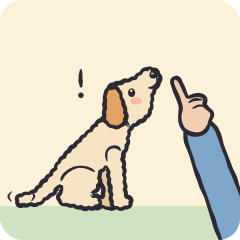 Core skill Understanding Cues
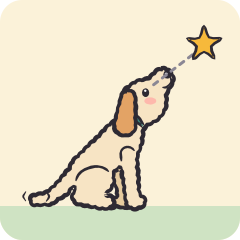 Core skill Focus
- ExerciseCharging Your Marker Word: How to Teach Your Dog That “Yes” Means a RewardDoable at home (Steps 1–4 at home)Read →
- ExerciseThe Name GameDoable at home (Steps 1–2 at home)Read →
- ExerciseMaking the Crate a Happy Place: Step-by-Step Crate Training Your Dog Will ChooseDoable at home (Steps 1–4 at home)Read →
- ExercisePuppy Socialization: How to Make New Things Good ExperiencesStart at home, finish outside (Steps 1–2 at home)Read →
- ExerciseSay Please by SittingDoable at home (Steps 1–3 at home)Read →
- ExerciseHand Target: How to Teach Your Dog “Touch” — and Use It for Recall and Passing Other DogsDoable at home (Steps 1–3 at home)Read →
- ExerciseRecall GamesDoable at home (Steps 1–3 at home)Read →
- ExerciseThe Trade Game: Teach Your Dog to Drop It by Swapping, Not GrabbingDoable at home (Steps 1–4 at home)Read →
Sources
- VCA Animal Hospitals (Lindell, Feyrecilde, Horwitz, Landsberg) — Puppy Behavior and Training: Training Basics
- VCA Animal Hospitals — Puppy Training Schedule (When should you start puppy classes?)
- American Kennel Club — What Are The First Things You Should Teach a Puppy? (Stephanie Gibeault, MSc, CPDT)
- American Kennel Club — Puppy Training Timeline: Teaching Good Behavior Before It’s Too Late (Mary Kearl; sponsored by Purina Pro Plan)
- American Kennel Club — Teach Your Puppy These 5 Basic Cues (Paisley Lunchick, RVT, KPA-CTP)
- American Kennel Club — How to Make Sure Your Puppy Gets Enough Sleep (Jan Reisen)
- The Royal Kennel Club — Why does my puppy sleep so much?
- American Kennel Club — Puppy Potty Training Timeline
- American Kennel Club — How to Use Clicker Training to Communicate With Your Dog (Stephanie Gibeault, MSc, CPDT)
- Dogs Trust — Getting started with puppy training
- Dogs Trust — Introducing a marker
- Dogs Trust — Positive reinforcement: training with rewards
- Dogs Trust — Recall training
- Battersea Dogs & Cats Home — The basics of clicker training
- AVSAB — Position Statement on Puppy Socialization
- RSPCA — Caring for your puppy
- Oregon Humane Society — Sit to Say “Please”
- WSAVA Global Nutrition Committee — Feeding treats to your dog (Guide to Treats, 2025)
- Merck Veterinary Manual (Dog Owners) — Infectious Diseases of the Urinary System in Dogs
- Humane World for Animals (formerly HSUS) — How to potty train your dog or puppy
- ASPCA — Mouthing, Nipping and Biting in Puppies
- The Animal Welfare (Licensing of Activities Involving Animals) (England) Regulations 2018, Schedules 3 and 6 (legislation.gov.uk)
- Animal Legal & Historical Center (Michigan State University College of Law) — Table of State Laws Concerning Minimum Age for Sale of Puppies (Wisch, 2025)